
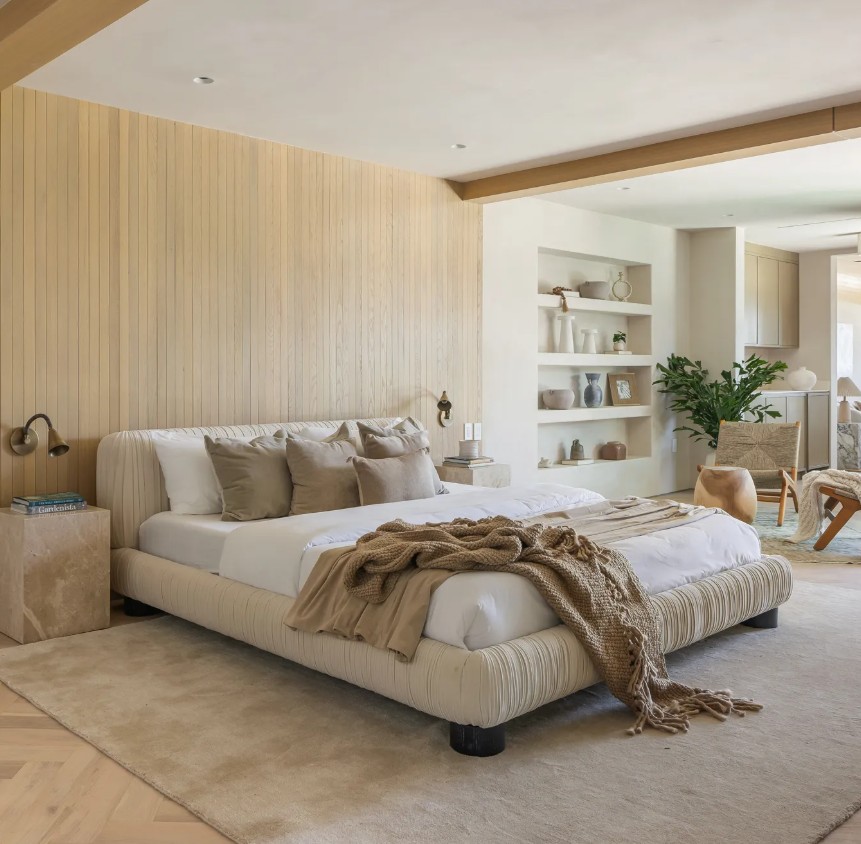
I’ll be honest — for years my own bed room was an afterthought. Whatever furniture didn’t fit anywhere else in the house ended up in there. A mismatched nightstand from my parents’ garage. A lamp that was too dim to read by. It worked, technically. But it never felt like a room I wanted to be in, and I think a lot of people are living in some version of that same setup right now without really noticing it.
Here’s the thing about bedrooms — we spend close to a third of our lives in them, and yet they’re usually the last room in the house to get any real thought put into them. The living room gets the nice couch. The kitchen gets the renovation budget and the new countertops. The bed room just… exists.
That doesn’t have to be the case, and fixing it isn’t nearly as expensive or complicated as people assume. After redoing my own room a couple of times (badly, at first) and helping a few friends do the same, I’ve picked up on a handful of things that actually move the needle. Not trends, just practical stuff that makes a room feel calmer and work better.
Pick the Bed Before You Pick Anything Else
Most people start with paint swatches or throw pillows, which honestly is backwards. The bed is the biggest object in the room and it dictates everything else — how much space you have left, where the furniture can go, even how the room feels when you walk in.
So figure out the size first. This is especially tricky in smaller rooms, guest rooms, or shared spaces that need to pull double duty as an office. In those cases, a full size bed room set tends to be the better call over a queen. It’s roomier and more comfortable than a twin, but it doesn’t eat up the whole floor plan the way a queen or king can. If your room is under about 120 square feet, this is usually the size that actually makes sense — not just the size that looks impressive.
One thing I’d recommend: buy a matched set rather than piecing furniture together from different stores. A full size bed room set that includes the nightstands and dresser saves you from spending weeks trying to match finishes later, and it’s often cheaper as a bundle anyway.
Measure the Room. Actually Measure It.
I skipped this step once and ended up with a bed frame that made the closet door impossible to open all the way. Lesson learned.
Before you buy anything, grab a tape measure and get the room’s length, width, and where the doors and windows swing. Leave roughly two feet of walking space around the bed if you can — less than that and the room starts to feel cramped no matter how nice the furniture is. It sounds tedious, but fifteen minutes with a tape measure will save you from a return shipping headache later.
Color Says More Than You’d Think
There’s actual research on this, not just design opinion — cooler, muted colors like soft blue, sage, or warm gray tend to be linked to better sleep than bright, high-energy shades like red or orange. That doesn’t mean the room has to be dull. It just means the bold color should probably live on an accent wall or in the bedding, not across all four walls.
A trick that works in almost any bed room: one neutral, one supporting tone, one accent. Warm white walls, a wood-toned bed frame, and maybe a navy or rust-colored throw pillow. Simple, but it works.
Lighting Is Usually the Weak Link
Most bedrooms rely on one overhead light and nothing else, which is really the worst setup for a room you’re supposed to relax in. Overhead light is harsh, and it does nothing for the mood in the evening.
What’s worked better for me is layering the lighting instead:
- Something dimmable for general light — an overhead fixture or a floor lamp works.
- A reading lamp on each nightstand, ideally adjustable.
- Something softer for the evenings, like a warm-toned lamp or LED strip tucked behind the headboard.
It’s a small change, but it makes the same room feel bright and usable in the morning and genuinely calm at night.
Storage Matters More Than People Expect
A messy room undoes all the other work, no matter how good the furniture looks. Before buying decor, think honestly about how much storage you need, not how much you wish you needed.
If space is tight, look for a full size bed room set with drawers built into the frame, or a headboard with built-in shelving. It can replace a bulky separate dresser entirely. Under-bed storage bins are also worth it — cheap, and they keep off-season clothes out of sight without taking up closet space.
Mix Your Textures, Not Just Your Colors
This is the part people skip, and it’s the difference between a room that looks flat and one that looks intentional. If every fabric in the room matches perfectly and feels the same, it ends up looking a little sterile.
Try mixing a woven rug with a chunky knit blanket, linen bedding instead of the shiny synthetic kind, and maybe a rattan basket somewhere for storage. None of it costs much, but it adds depth that’s hard to put your finger on until it’s missing.
Before You Call It Done
Walk through the room one more time and ask a few honest questions. Can you get around the bed comfortably from every side? Is there a lamp within arm’s reach for reading? Does the dresser actually fit your real wardrobe, not the one you wish you had? Would the room still look put-together with the lights off?
If the answer’s yes across the board, you’re in good shape. Not because it’ll photograph well, but because it’ll actually work for you every day.
A Few Common Questions
What size bed works best in a small bedroom?
For anything under about 120 square feet, a full size bed room set usually strikes the right balance — more comfortable than a twin, without overwhelming the room the way a queen can.
How much clearance should I leave around the bed?
Around two feet on each side and at the foot of the bed is a good baseline, so drawers and doors aren’t blocked and there’s room to actually walk around.
Does wall color really affect how well you sleep?
There’s reasonable evidence that it does — cooler, muted tones are generally associated with more restful sleep than bright, stimulating colors, according to sleep researchers and designers alike.
At the end of the day, a good bed room doesn’t need a big budget. It needs a plan — starting with the right size bed, a layout that actually gives you room to move, and lighting that works for both mornings and nights.
