
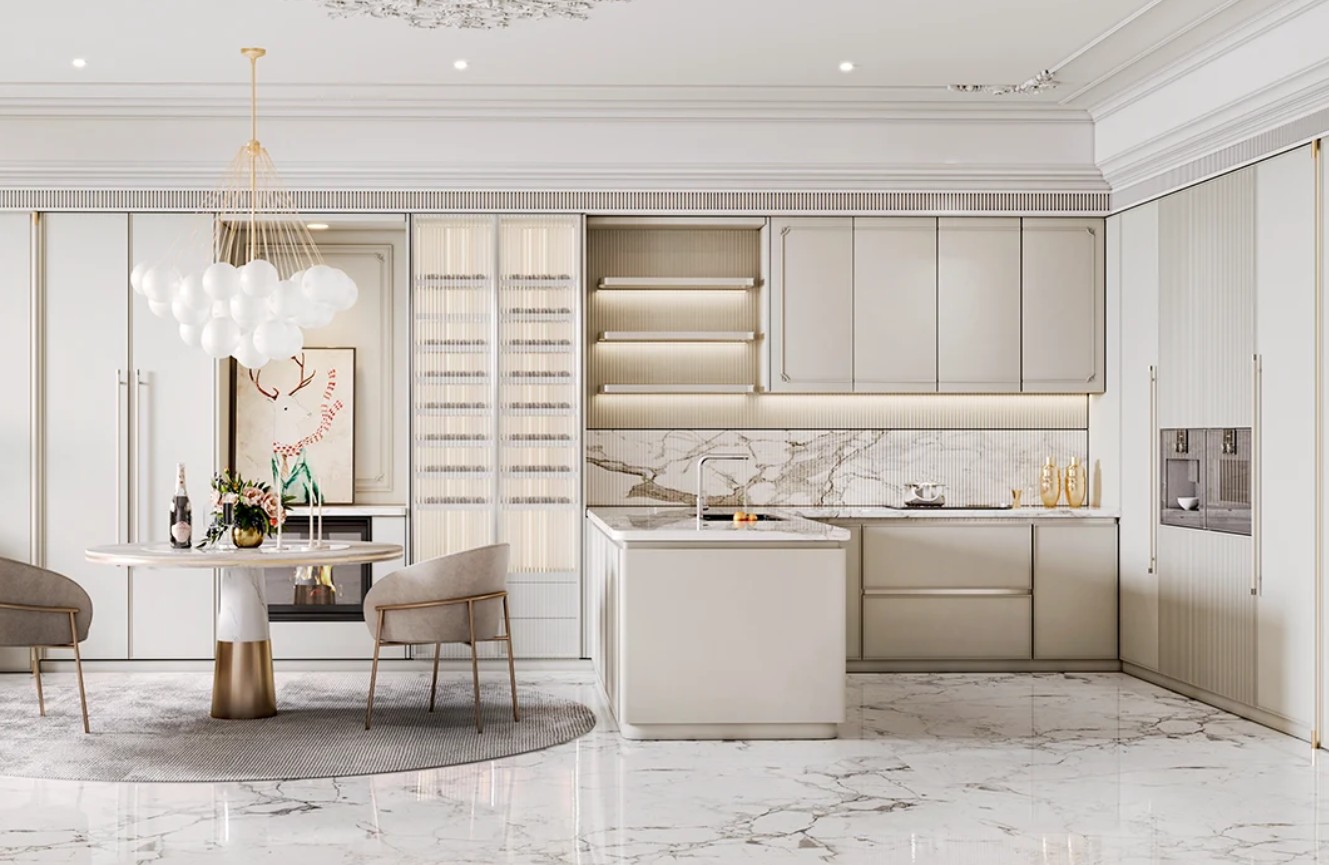
Ask most homeowners what room they’d renovate first if money weren’t a concern, and the kitchen wins almost every time. Nothing else in a house pulls this much weight. That’s probably why “luxury kitchen design” has turned into one of the most searched terms in home renovation, and honestly, it deserves the attention.
I’ve spent years working alongside architects and designers on high-end remodels, and one thing keeps standing out: the best luxury kitchens rarely cost the most money. Every material, every layout choice, every fixture is there for a reason, not because it looked good in a catalog. This piece walks through what that actually means in practice — how luxury kitchen design differs from ordinary kitchen design, what changes when you’re working with a large luxury kitchen, and how to pick the right team if you’re hiring one of the many luxury kitchen design companies out there.
What actually makes a kitchen “luxury”?
Here’s the thing people get wrong first — luxury isn’t a price tag, it’s craftsmanship and coherence. A standard kitchen design is built around function. Cabinets that store things. Countertops that don’t stain. Appliances that turn on and cook food. Nothing wrong with that, but it stops there.
A luxury kitchen takes that same functional base and layers in details that most people never consciously notice but absolutely feel. Custom millwork instead of stock cabinet boxes. Natural stone — quartzite, marble, sometimes a slab of something the designer found on a trip and just had to use — instead of laminate. Professional-grade appliances, often paneled so they disappear into the cabinetry rather than announcing themselves.
If there’s one thread running through every great luxury kitchen I’ve seen, it’s this: nothing feels accidental. The hardware finish matches the faucet, the faucet matches the era of the cabinetry, and none of it looks like it was chosen off a checklist.
Kitchen design versus luxury kitchen design
People search these terms together a lot, so it’s worth untangling. Kitchen design, in the plain sense, is a planning exercise — where the sink sits relative to the stove, how much counter space a family actually needs, how three people can move through the room without colliding. It’s rooted in ergonomics and budget, and it’s genuinely useful work.
Luxury kitchen design starts from that same foundation but asks a different question. Not “does this work?” but “how does this feel?” A good luxury designer will ask how the room should feel at 7 a.m. on a Tuesday versus during a holiday dinner with fifteen people crammed in. They think about which materials will still look good in twenty years and which ones will look dated in five. They try to make technology disappear rather than dominate the room. That’s really the whole difference — a kitchen that works, versus one that makes you want to linger in it.
Designing a large luxury kitchen
Bigger homes usually mean a large luxury kitchen design, and size brings its own headaches. More square footage sounds like more freedom, but it’s also easier to end up with a room that feels like an airport terminal if nobody plans it carefully.
A few things that consistently work in oversized kitchens: break the room into zones instead of treating it as one giant open area. A cooking zone, a prep zone, a cleanup zone, maybe a separate bar or coffee station for entertaining — this keeps the space usable even with four people in it at once. The island usually ends up being the anchor; oversized islands with waterfall countertops and built-in seating naturally pull the eye and give the room a center of gravity.
One mistake I see a lot in big kitchens is going too hard on hard surfaces — stone counters, glossy cabinets, polished floors — until the whole room feels cold. Warm wood tones, textured stools, softer ambient lighting fix that fast. And don’t skip ventilation planning. A large kitchen with a professional range and an open floor plan needs real acoustic and airflow thought, or it turns loud and smoky during a big gathering, which nobody wants at their own party.
Picking among luxury kitchen design companies
Once you know roughly what you want, the harder part is finding someone who can actually build it. There’s no shortage of luxury kitchen design companies, from small boutique studios to full architecture-and-construction firms, and the difference between a good one and a mediocre one shows up fast once the drywall comes down.
A few things worth checking before signing anything: look at a company’s full portfolio, not just the two best photos on their homepage — consistency across many projects tells you more than a single gorgeous shot. Ask whether they handle design and construction together, since design-build firms tend to have fewer communication gaps and fewer surprise change orders. Push for real numbers on materials and labor upfront; a company that’s vague about cost early on tends to stay vague about cost later. Talk to past clients if you can, ideally ones who did a project roughly your size. And be skeptical of anyone promising a huge kitchen renovation in a suspiciously short timeline — these projects genuinely take months, and rushing them shows.
What’s actually trending right now
A few directions in luxury kitchen design have stuck around long enough that they’re clearly not just fads. Warm minimalism is one — clean lines, but with oak, limestone, brushed brass, instead of the stark all-white kitchens that dominated a decade ago. Hidden technology is another: built-in appliances, outlets tucked out of sight, smart systems that don’t visually clutter the room.
Butler’s pantries and scullery kitchens have made a real comeback too — a second, hidden prep space so the main kitchen stays photo-ready even mid-cooking. And sustainability has quietly become part of the luxury conversation, not despite the price tag but alongside it — reclaimed wood, low-VOC finishes, materials that are high-end and responsibly sourced at the same time.
Final thought
Luxury kitchen design isn’t really about chasing a trend list or spending without limits — it’s about knowing exactly how you live in that room and building around it. Whether you’re upgrading a handful of things in a modest kitchen or planning a large luxury kitchen design from scratch, it works best when the practical and the beautiful get figured out together, from the very first conversation.
If you’re just starting out, don’t begin with finishes or fixtures. Begin by thinking through how you actually use your kitchen day to day, then bring that to a designer or one of the established luxury kitchen design companies who can turn it into something that’ll still feel right in twenty years.
