
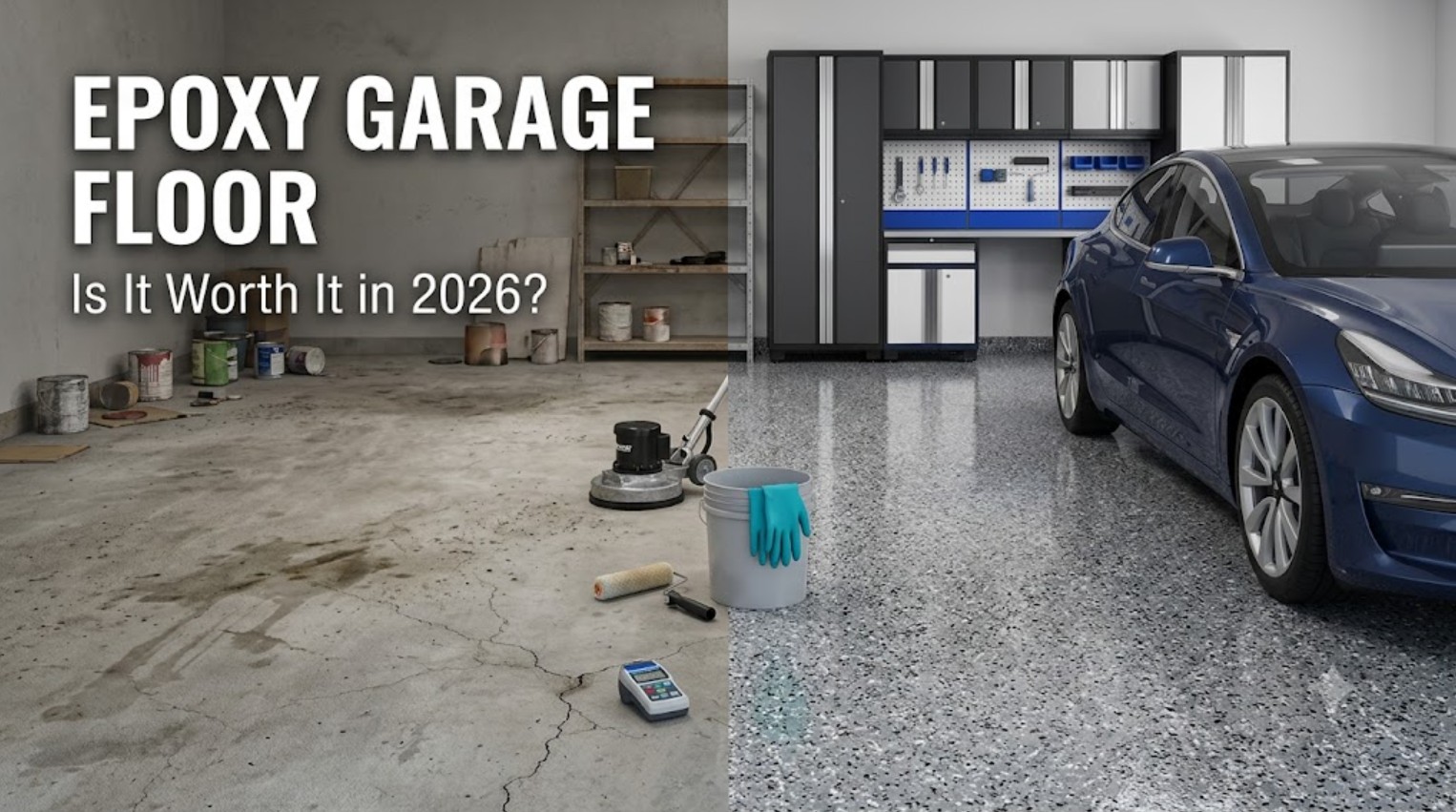
An unfinished garage floor may look acceptable when it is new, but bare concrete gradually collects dust, absorbs oil, and develops stains that are difficult to remove. An epoxy garage floor creates a smoother, sealed surface that can improve the appearance of the garage while making routine cleaning easier.
Whether epoxy is worth paying for in 2026 depends on more than the finished colour or shine. Concrete condition, moisture, surface preparation, product quality, application thickness, and curing time all affect performance. A properly installed coating can remain useful for years, while a poorly prepared floor may peel, bubble, or lift under vehicle tyres.
What Is an Epoxy Garage Floor?
An epoxy garage floor is produced by mixing an epoxy resin with a compatible hardener. When the two components are combined, a chemical reaction begins and the material cures into a rigid coating bonded to the concrete. This is different from ordinary one-part floor paint, which mainly dries as water or solvent evaporates.
Some retail products use terms such as “epoxy paint” even when they are thinner or formulated differently from professional resin systems. Buyers should check the technical information to confirm whether the coating contains two separate components that must be mixed before application. A genuine two-part product generally provides better chemical resistance and adhesion than standard floor paint when the slab is properly prepared.
A complete garage-floor system may contain several layers. These can include a primer, coloured epoxy base coat, decorative vinyl flakes, traction aggregate, and a clear protective topcoat. Some installers use epoxy as the main bonding and build layer, then add a polyurethane or polyaspartic topcoat for improved scratch and ultraviolet resistance.
Epoxy protects the surface of sound concrete, but it does not repair structural movement. If the slab continues to crack or shift, the damage may eventually appear through the coating. Expansion joints and other moving joints also need the correct flexible treatment rather than simply being covered with rigid resin.
Benefits and Drawbacks of Epoxy Flooring
The main appeal of an epoxy garage floor is its combination of durability and appearance. The coating reduces concrete dust and creates a surface that is easier to sweep or mop. Oil, road dirt, antifreeze, and many common garage spills are less likely to soak into the slab when they are removed promptly.
Epoxy is also highly customisable. Homeowners can choose solid colours, decorative flakes, quartz aggregate, metallic effects, and different gloss levels. A lighter finish may reflect more artificial light and make the garage feel cleaner and brighter. Decorative flakes can also help disguise dust, minor marks, and small imperfections.
However, epoxy is not completely maintenance-free or damage-proof. Glossy surfaces can become slippery when wet, especially if no traction additive is included. Heavy metal tools, dragging cabinets, welding activity, and sharp vehicle equipment can scratch or chip the coating. Highly textured finishes improve grip but may be more difficult to mop.
Traditional epoxy can also yellow or amber when exposed to direct sunlight. This is often most noticeable near an open garage door or on pale colours. A UV-resistant clear topcoat may reduce the problem, but the complete system must be compatible. Fast-curing polyaspartic or polyurea products may offer better colour stability, although they often cost more and leave less working time during installation.
Why Preparation and Moisture Testing Matter
Surface preparation is usually the most important part of the project. Concrete must be structurally sound and free from oil, dust, weak surface material, sealers, curing compounds, and previous coatings. Applying epoxy over contaminated or polished concrete can prevent proper bonding even when the coating itself is high quality.
Professional installers usually prepare the slab with diamond grinding or shot blasting. These methods remove weak material and create a controlled surface profile that allows the coating to bond mechanically. Simple washing or light acid etching may not be sufficient for every floor, particularly where the slab has oil contamination, an old sealer, or an existing coating.
Cracks
Cracks, pits, and damaged areas should be repaired with products compatible with the selected epoxy system. Static cracks can often be filled before coating, but active movement needs separate treatment. Covering a moving joint with rigid epoxy may produce a new crack through the finished surface.
Moisture testing is equally important. Water vapour can move upward through concrete, even when the surface appears dry. If vapour pressure exceeds the coating’s tolerance, it may cause blisters, cloudy areas, or delamination. Tests such as in-situ relative humidity measurements provide more useful information than simply touching the slab or relying on its age.
New concrete is often allowed to cure for about 28 to 30 days before conventional coatings are applied, but time alone does not prove that the slab is ready. Drying conditions, slab thickness, groundwater, and the presence of a vapour barrier all influence moisture. The acceptable result must be based on the coating manufacturer’s technical requirements.
Uncured epoxy also requires careful handling. The Occupational Safety and Health Administration’s epoxy guidance notes that resin systems can cause skin irritation and sensitisation. Appropriate gloves, eye protection, ventilation, and other controls should be selected from the product’s Safety Data Sheet.
Epoxy Garage Floor Cost and Installation Options
Professional epoxy garage-floor installation commonly costs about $2 to $12 per square foot in the United States. The final price depends on the garage size, local labour rates, concrete condition, coating thickness, number of layers, decorative flakes, repairs, and topcoat type.
A basic one-car garage with limited preparation will usually cost less than a damaged two- or three-car garage requiring coating removal, crack repairs, grinding, moisture treatment, and a full-flake finish. Quotes should be compared by system specification rather than price alone. A cheap estimate may include only cleaning and a thin coat, while a higher quote may include mechanical preparation, primer, full flake broadcast, and a UV-resistant clear layer.
DIY kits are less expensive and may be suitable for a small, dry floor in good condition. However, the homeowner must still clean, grind or etch, repair cracks, mix accurately, and apply the product within its limited working time. Once the resin and hardener are combined, the mixture can cure quickly and become unusable.
Professional installation is generally safer when the slab has moisture problems, previous coating failure, significant oil contamination, or extensive damage. It is also worth considering when a full decorative-flake system, rapid-curing topcoat, or written workmanship warranty is important.
Curing time must be included in the plan. Some epoxy systems allow light foot traffic after roughly one day but require several days before vehicles can return. Cooler temperatures may slow curing. Parking too early can leave tyre marks, indentations, or lifted areas even when the surface feels dry.
Is Epoxy the Right Choice for Your Garage?
Epoxy is a strong option when the garage has a dry, stable concrete slab and the owner wants a seamless, easy-to-clean surface. It is particularly useful for workshops, storage areas, home gyms, and garages where appearance matters. A full-flake system with a clear topcoat can balance durability, traction, and visual consistency.
It may not be the best choice for every property. Persistent moisture, active structural cracking, severe oil contamination, or regular exposure to direct sunlight may justify a different system. Interlocking floor tiles, polished concrete, concrete sealer, polyurethane, or polyaspartic coatings may be more appropriate in some cases.
Before choosing epoxy, ask the installer how the floor will be prepared, what moisture test will be used, and how cracks and joints will be treated. The quotation should identify the manufacturer, product names, number of coats, surface-preparation method, cure time, and warranty exclusions.
The best value usually comes from investing in preparation rather than choosing the most decorative finish. A modest coating over correctly prepared concrete is more likely to last than an expensive colour system installed over a damp or contaminated slab.
Conclusion
An epoxy garage floor can be worth the investment in 2026 when the concrete is suitable and the coating is installed correctly. It offers a cleaner appearance, easier maintenance, reduced concrete dust, and useful resistance to ordinary garage spills and abrasion.
Its durability depends on moisture control, mechanical preparation, accurate mixing, suitable environmental conditions, and enough curing time. Homeowners should compare the complete installation system rather than selecting a contractor only by price or warranty language.
Frequently Asked Questions
How long does an epoxy garage floor last?
A properly installed residential epoxy floor may last several years or longer. Its lifespan depends on preparation, product quality, traffic, sunlight, moisture, and maintenance.
Does epoxy peel under hot tyres?
It can if the coating has poor adhesion, insufficient cure, or weak surface preparation. A properly specified and fully cured system is less likely to experience hot-tyre pickup.
Can epoxy be applied over cracked concrete?
Static cracks can often be repaired before coating. Active structural cracks and moving joints require specialised treatment and may reappear through rigid epoxy.
Is epoxy slippery when wet?
Smooth glossy epoxy can become slippery. Decorative flakes and traction additives can improve grip, although more texture may make cleaning slightly harder.
