
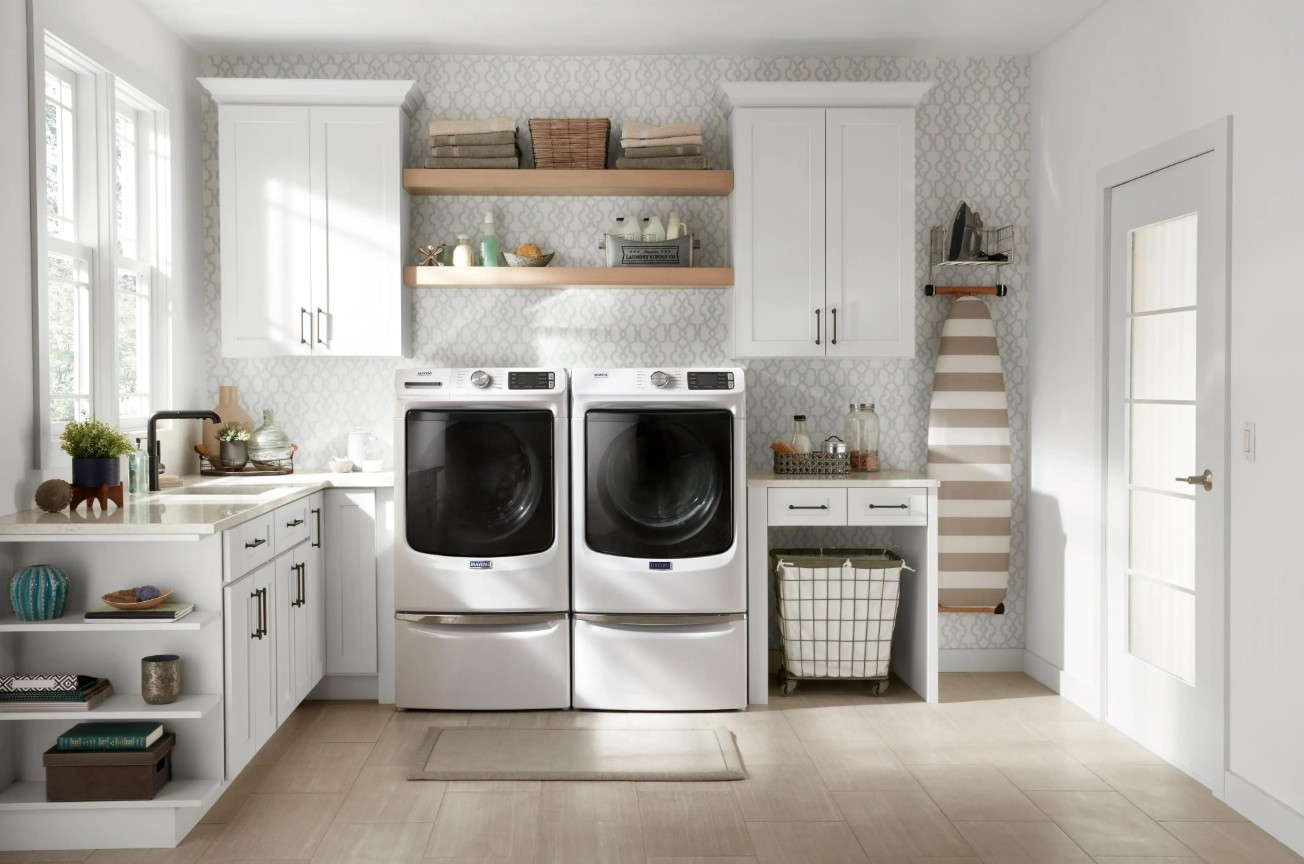
A laundry room is much more than a place to wash clothes. In modern homes, it serves as a dedicated workspace where laundry can be sorted, cleaned, dried, folded, ironed, and stored efficiently. Whether it’s a spacious utility room or a compact laundry closet, a well-planned laundry area helps streamline household chores while keeping the rest of the home organised.
Today’s laundry rooms combine functionality with thoughtful design. Homeowners increasingly look for layouts that maximise storage, improve workflow, and make everyday tasks easier. In this guide, we’ll explain what a laundry room is, explore its essential features, discuss popular layouts, and share practical ideas to help you create a space that is both efficient and comfortable.
What Is a Laundry Room?
A laundry room is a dedicated area within a home or residential building designed specifically for washing, drying, and caring for clothing, towels, bedding, and other washable items. Depending on the size of the property, the room may be located in the basement, garage, mudroom, hallway, or near the bedrooms. In many countries, particularly the UK, a similar space is often referred to as a utility room.
While the primary purpose of a laundry room is clothing care, modern designs often support several household tasks. Many homeowners use the space to organise cleaning supplies, store household essentials, treat stains, fold laundry, or air-dry delicate garments. A well-designed laundry room keeps these activities contained in one convenient location, reducing clutter throughout the rest of the home.
Essential Features of a Well-Designed Laundry Room
Every functional laundry room starts with a few essential components. At the heart of the space are a washing machine and clothes dryer, but additional features such as a utility sink, countertop, cabinets, shelving, and proper lighting can significantly improve efficiency. These elements help create a smooth workflow from sorting dirty clothes to folding clean laundry.
Experts also recommend designing the room around the natural laundry process: sort, wash, dry, fold, and store. The This Old House laundry room design guide offers practical advice on planning layouts, selecting durable materials, and improving storage for everyday use. Following trusted home improvement guidance can help homeowners create a laundry room that is both practical and long-lasting.
Common Laundry Room Features
| Feature | Purpose |
|---|---|
| Washing Machine | Cleans clothes and fabrics |
| Clothes Dryer | Dries laundry quickly |
| Utility Sink | Hand washing and stain treatment |
| Countertop | Folding and sorting clothes |
| Cabinets | Store detergents and supplies |
| Shelves | Keep everyday items organised |
| Hanging Rod | Air-dry delicate clothing |
| Laundry Hampers | Separate dirty and clean laundry |
Popular Laundry Room Layouts and Design Ideas
The best laundry room layout depends on the available space and household needs. A side-by-side arrangement is one of the most common designs, allowing homeowners to place a countertop above the appliances for folding clothes. In smaller homes or apartments, stacked washer and dryer units save valuable floor space while maintaining full functionality.
Larger homes often benefit from L-shaped or U-shaped layouts that provide additional cabinets, countertops, and storage. Other popular design ideas include installing floating shelves, adding a built-in ironing station, incorporating a drying rack, or choosing water-resistant flooring such as porcelain tile or luxury vinyl. Good ventilation and bright task lighting also improve comfort while helping protect the room from excess moisture.
Storage Solutions and Maintenance Tips
Storage plays a major role in keeping a laundry room organised. Wall-mounted cabinets, floating shelves, pull-out baskets, rolling carts, and labelled containers make it easier to keep detergents, fabric softeners, stain removers, and cleaning products neatly arranged. Vertical storage is particularly useful in smaller laundry rooms where floor space is limited.
Routine maintenance is equally important. Cleaning the dryer’s lint filter after every load improves performance and reduces fire risk. Checking water supply hoses for signs of wear, ensuring proper ventilation, and keeping the room clean and dry all help extend the lifespan of appliances. These simple habits not only improve efficiency but also create a safer environment for the entire household.
Conclusion
A well-designed laundry room makes everyday household tasks more organised, efficient, and convenient. Whether your home includes a spacious utility room or a compact laundry closet, thoughtful planning can improve workflow while providing practical storage and comfortable working conditions.
By selecting the right layout, incorporating smart storage solutions, and maintaining your appliances regularly, you can create a laundry room that serves your household for years to come. Even small improvements can make laundry less time-consuming and help keep the rest of your home tidy.
FAQs
What is the purpose of a laundry room?
A laundry room provides a dedicated space for washing, drying, folding, ironing, and storing clothing and household linens.
Where should a laundry room be located?
Common locations include the basement, garage, mudroom, hallway, or near bedrooms for added convenience.
What should every laundry room include?
At minimum, it should have a washing machine, clothes dryer, storage space, and good lighting. Many homeowners also add a utility sink and folding counter.
How can I make a small laundry room more functional?
Use stacked appliances, wall-mounted shelves, cabinets, hanging rods, and multi-purpose storage solutions to maximise available space.
