
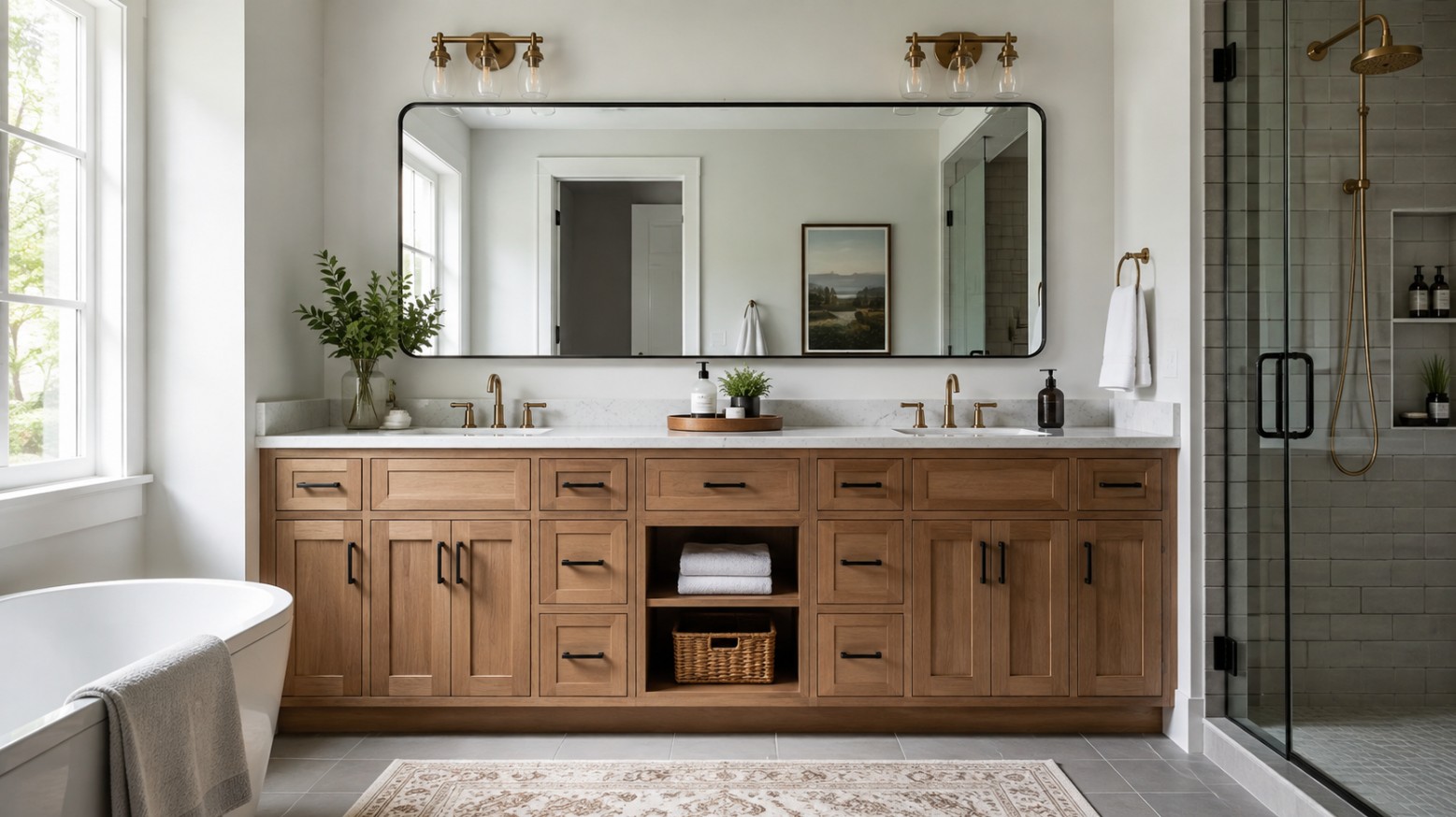
Choosing the right bathroom cabinets can make a noticeable difference in how your bathroom looks and functions. Good cabinetry gives you practical storage, keeps daily essentials organized, and helps create a cleaner, more comfortable space.
The challenge is that bathroom cabinetry is not one-size-fits-all. A small powder room has very different needs from a large family bathroom, and factors such as moisture, plumbing, available floor space, and storage requirements all affect the final choice. Before buying, it helps to understand the main cabinet types, suitable materials, standard dimensions, and the features that provide the most everyday value.
Understanding the Different Types of Bathroom Cabinets
Bathroom cabinetry comes in several forms, and each type serves a different purpose. A bathroom vanity cabinet is the most common option because it combines sink support with storage underneath. Freestanding vanities are especially popular because they are available in many sizes and are usually easier to install when existing plumbing is already in the right position.
Floating or wall-mounted vanities are another practical choice, particularly in smaller or modern bathrooms. Because they leave the floor visible, they can make the room feel more open and make cleaning underneath easier. Larger bathrooms may benefit from double-sink vanities, while compact spaces can use narrow vanities, corner cabinets, medicine cabinets, or wall-mounted storage.
Bathroom cabinets are not limited to the area around the sink. Tall linen towers can hold towels and toiletries, while wall cabinets make good use of vertical space without taking up valuable floor area. Over-the-toilet cabinets can also add storage in rooms where every inch matters.
Before choosing a cabinet style, think about what you actually need to store. If you mainly need space for toothpaste, skincare, and medicines, a vanity plus medicine cabinet may be enough. If the bathroom is shared by several people, deeper drawers, shelves, and additional linen storage may make daily routines much easier.
Choosing the Right Size and Layout
Accurate measurements are one of the most important parts of choosing bathroom cabinets. A cabinet may look perfect online or in a showroom but still cause problems if it blocks a doorway, interferes with plumbing, or leaves too little room to move around comfortably.
Bathroom vanities are available in a wide range of widths, with common options including approximately 24, 30, 36, 48, 60, and 72 inches. Smaller vanities generally suit powder rooms and compact bathrooms, while 48-inch and larger models provide more countertop and storage space. Double vanities often start around 60 inches, although exact measurements vary by manufacturer.
Measure the total wall space first, then check the position of water supply lines, drains, electrical outlets, mirrors, doors, and nearby fixtures. Do not forget to measure how far drawers and cabinet doors extend when opened. A vanity that technically fits the wall may still be inconvenient if a drawer hits the bathroom door or toilet.
It is also useful to check professional bathroom-planning guidance before finalizing your layout. The National Kitchen & Bath Association provides planning information related to bathroom clearances, accessibility, storage, and safe design. Local building codes should also be considered, especially during major renovations or when plumbing and electrical systems are being moved.
Best Materials for Durable Bathroom Cabinets
Bathrooms expose cabinetry to humidity, condensation, splashes, and occasional direct water contact. For that reason, choosing the right material is just as important as choosing the right color or cabinet style.
Plywood is widely considered a strong option because its layered construction provides good stability and moisture resistance when properly finished. High-quality plywood cabinets are often more expensive than basic engineered-wood products, but they can offer better long-term durability in a busy bathroom.
Solid wood can also be an excellent choice, particularly when it is properly sealed and finished. It provides a natural, premium appearance and can last for many years, but wood can react to changing humidity levels. Proper ventilation and protective finishes are important for maintaining its condition.
Moisture-resistant MDF is another common material for bathroom cabinets. MDF has a smooth surface that works well with painted finishes and is generally more affordable than solid wood. However, standard MDF and low-quality particleboard can swell if water penetrates the surface or exposed edges, so bathroom-rated construction is preferable.
When comparing cabinets, look beyond the material name. Check the quality of the finish, edge sealing, hinges, drawer slides, and back panels. Soft-close hardware and sturdy drawer boxes are often signs of better construction. Even a good cabinet material can deteriorate if water is regularly allowed to sit around the sink or cabinet base.
Storage Features and Design Details That Matter
The best bathroom cabinet is not necessarily the largest one. Good storage is about making the available space easier to use. Drawers are often more practical than deep open cabinets because they allow you to see and reach smaller items without searching through products stored at the back.
Consider what you use every day. Hair tools, cosmetics, cleaning products, towels, shaving equipment, medicines, and spare toiletries may all need different kinds of storage. Cabinets with adjustable shelves give you more flexibility, while drawer dividers can prevent small items from becoming cluttered.
Useful storage features include:
- Deep drawers for larger toiletries and towels
- Adjustable shelves for products of different heights
- Soft-close doors and drawers for quieter everyday use
- Built-in organizers for cosmetics and grooming products
- Tall cabinets for linen and bulk storage
- Medicine cabinets for frequently used smaller items
Think carefully about plumbing as well. Pipes underneath the sink can reduce usable cabinet space, so drawers and shelves designed around plumbing may provide better organization than one large open compartment.
Lighting, mirrors, and countertop space also affect how useful the cabinet feels. A large vanity with very little clear countertop may still be inconvenient. Balance storage with enough surface area for the products you use while getting ready.
Matching Bathroom Cabinets With Your Style and Budget
Bathroom cabinets have a strong visual impact because they usually occupy a large part of the room. The cabinet style should work with your flooring, wall colors, countertop, mirror, fixtures, and overall bathroom design.
For a modern bathroom, flat-panel doors, floating vanities, simple hardware, and clean finishes work well. Traditional bathrooms often suit framed doors, decorative hardware, and warm wood tones. Shaker-style bathroom cabinets are especially versatile because they can fit modern, farmhouse, transitional, and classic interiors.
Color also affects how the space feels. White and lighter finishes can help a compact bathroom appear brighter, while natural wood adds warmth and texture. Black, navy, charcoal, and muted green cabinets can create a stronger design statement, especially when balanced with lighter countertops and walls.
Budget should include more than the cabinet itself. A low-priced vanity may become expensive if you need to purchase the countertop, sink, faucet, hardware, and installation separately. Moving plumbing can also increase renovation costs considerably.
Stock and ready-to-assemble cabinets are usually the most affordable choices. Semi-custom cabinets provide more flexibility in sizes and finishes, while custom bathroom cabinets are useful when the room has unusual dimensions or highly specific storage requirements. Spending more can make sense when it improves construction quality, moisture resistance, and everyday functionality rather than simply adding decorative details.
Conclusion
Choosing the best bathroom cabinets starts with understanding your space, storage needs, and daily routine. Measure carefully, choose materials designed to handle bathroom moisture, and consider how drawers, shelves, plumbing, and surrounding fixtures will work together.
Style matters, but functionality and durability should come first. A well-chosen bathroom cabinet can improve organization, make the room easier to use, and complement the overall design without wasting valuable space.
FAQs
What is the best material for bathroom cabinets?
Quality plywood, properly sealed solid wood, and moisture-resistant MDF are all good options. The best choice depends on your budget, desired finish, and how much moisture the cabinet is likely to encounter.
What is a good depth for bathroom cabinets?
Many bathroom vanities are roughly 17 to 24 inches deep, although compact models may be shallower. Always measure the room and surrounding clearance before choosing a depth.
Are floating bathroom cabinets good for small bathrooms?
Yes. Floating cabinets leave more visible floor space, which can make a small bathroom feel less crowded. They also make the floor underneath easier to clean.
Can bathroom cabinets be painted?
Yes. Many wood and MDF bathroom cabinets can be repainted if the surface is properly cleaned, prepared, primed, and finished with a durable moisture-resistant paint.
