
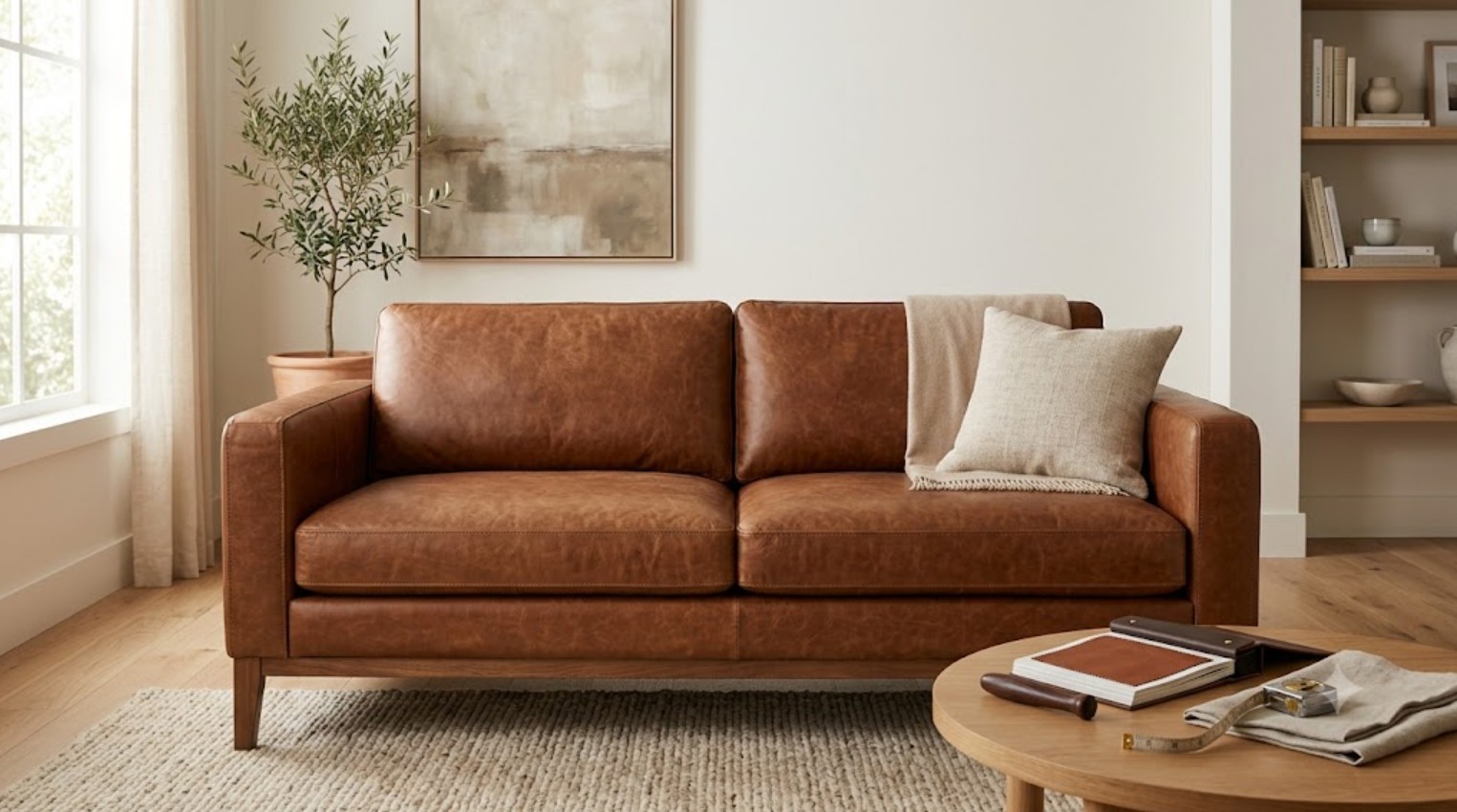
Buying a leather sofa is a significant decision. It often becomes one of the most used pieces of furniture in the home, so appearance should not be the only consideration. The leather type, surface finish, internal frame, seat support, cushion filling, dimensions, and warranty can all affect how comfortable the sofa feels and how well it performs over time.
The best choice will also depend on your household. A naturally finished sofa may suit someone who appreciates visible markings and a developing patina, while a protected finish may be more practical for a family with children or pets. Understanding what sits beneath the upholstery will help you compare models properly rather than relying on vague descriptions such as “luxury leather” or “premium quality.”
Understand Leather Types and Finishes
Not every leather sofa uses the same material across every surface. Some models use grain leather on the seats, arms, and back cushions but place split leather or synthetic material on the sides and rear. This can reduce the price without greatly affecting the areas that receive the most contact. However, the retailer should explain this clearly, so ask what material covers each part of the sofa.
You should also understand the difference between leather grade and leather finish. Full-grain leather retains its natural surface, including small scars, grain variations, and other markings. Corrected-grain leather has been buffed or treated to create a more consistent appearance. Split leather comes from a lower layer of the hide and is often coated to improve its colour and durability. Bonded leather is different again because it normally combines leather fibres with binding materials.
The finish determines how the leather feels and responds to everyday use. Aniline leather has a natural appearance and soft feel, but it can absorb spills and show scratches more easily. Semi-aniline leather includes a light protective finish, offering a balance between character and practicality. Pigmented or protected leather has a stronger surface coating, making it easier to clean and generally better suited to busy households.
Do not assume that the most natural leather is automatically the best option. A delicate aniline finish may look beautiful in a quiet living room but become difficult to maintain in a home with young children. For many buyers, a good-quality pigmented grain leather provides a sensible combination of comfort, durability, and straightforward care.
Check the Frame, Suspension, and Cushions
The upholstery is only one part of a well-made sofa. A premium hide cannot compensate for a weak frame or poor seat support. Ask what material forms the structural frame. Kiln-dried hardwood is commonly associated with durable furniture, while well-engineered wood can also perform reliably when it is used correctly. Be cautious when a seller provides no frame information or describes the structure only as “solid.”
Construction methods matter as much as the material. Strong sofa frames usually contain reinforced corners and joints that are screwed, dowelled, or properly blocked. Sit on different parts of the display model and shift your weight from side to side. The frame should feel stable, without noticeable twisting, creaking, or movement.
The suspension system supports the seat cushions and affects long-term comfort. Common options include sinuous springs, pocket springs, webbing, and traditional hand-tied springs. No single system guarantees quality because the materials, spacing, and installation also matter. Test every seating position, including the centre, as support can sometimes feel uneven across a wider sofa.
Cushion filling will influence both comfort and maintenance. Foam cushions usually provide a firmer feel and retain their shape with less attention. Fibre-filled cushions feel softer but require regular plumping and rotation. A foam core wrapped in fibre or feather can offer a useful balance between support and softness. Consider how you normally sit rather than choosing the cushion that feels most impressive during a brief showroom test.
Choose a Leather Sofa That Fits Your Lifestyle
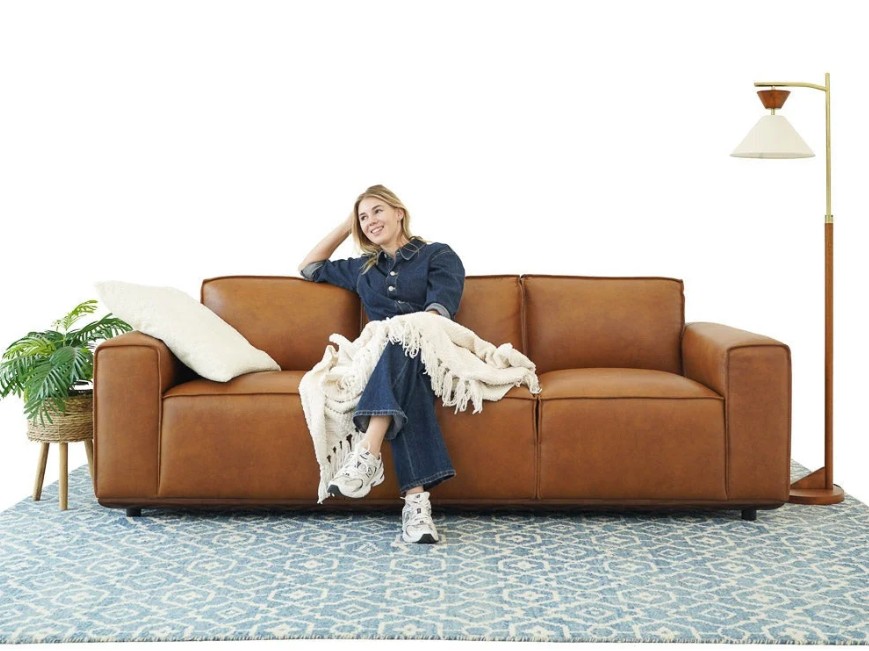
Think about how the sofa will be used each day. A formal sitting room may allow you to choose a softer, more natural finish, while a family living room needs something more forgiving. Protected leather is usually easier to wipe clean and less sensitive to small spills. Mid-tone colours can also be practical because very pale leather may show dye transfer, while very dark leather can make light scratches more visible.
Pet owners should remember that leather is not claw-proof. Small marks may blend into the patina of pull-up or naturally finished leather, but deeper scratches can remain permanent. Keep pets’ claws trimmed and consider whether individual cushions or panels can be replaced. Removable seat cushions also make rotation and maintenance easier.
Comfort depends on body size and sitting habits. A deep seat can be ideal for lounging but may feel awkward for shorter users unless they add a back cushion. A higher, shallower seat often supports a more upright position and makes standing easier. Arm height, back support, cushion firmness, and seat width can matter more than the sofa’s overall appearance.
Natural leather changes with use. It may soften, stretch, crease, and develop colour variation, especially in frequently used areas. These changes are often part of the material’s character rather than defects. Before buying, ask the retailer which changes are considered normal and which problems would qualify for a warranty claim.
Measure Your Space and Review Practical Details
Measure more than the empty space where the sofa will sit. Record the room dimensions, available wall width, skirting-board depth, nearby radiators, window positions, and the clearance required for doors and walkways. Use masking tape on the floor to outline the sofa’s footprint. This makes it easier to judge whether the furniture will dominate the room or restrict movement.
You must also measure the full delivery route. Check external doors, hallways, staircases, lifts, landings, and tight corners. Include door frames, handles, bannisters, and ceiling height where the sofa may need to be turned upright. A sofa that fits comfortably in the room can still be impossible to deliver through a narrow entrance.
Check the usable seating area rather than relying on labels such as two-seater or three-seater. Wide arms can reduce the actual space available for sitting. Compare the overall width with the internal seat width, and check the seat height and depth. Reclining sofas, corner units, and sofa beds also need additional operating clearance.
Review practical details such as removable feet, detachable arms, modular sections, and access to replacement parts. These features can simplify delivery, future moves, and repairs. For electrically operated recliners, confirm the position of power cables, transformers, and nearby sockets before deciding where the sofa will stand.
Compare Price, Warranty, Care, and Sustainability
Price should reflect more than the leather label. Compare the exact upholstery specification, frame construction, suspension, cushions, stitching, and warranty. Two sofas described as top-grain leather may differ significantly in finish, leather thickness, internal materials, and overall workmanship. A clear technical specification is more useful than marketing language.
Read the warranty before paying. Check whether it covers the frame, springs, cushions, stitching, electrical components, cracking, peeling, and unusual colour loss. Pay attention to exclusions for body oils, pets, sunlight, accidental damage, and failure to use approved care products. Keep your receipt, product description, care guide, and written answers from the retailer.
Maintenance instructions should match the specific finish. Dust the surface gently and blot spills rather than rubbing them. Avoid household polish, disinfectant wipes, washing-up liquid, alcohol, and general-purpose cleaners unless the manufacturer approves them. Some protected leathers can use a specialist conditioner, while certain aniline, nubuck, or coated products require different treatment.
Sustainability claims should also be specific. Ask whether the leather comes from a traceable tannery and whether the wooden frame carries recognised certification. The Leather Working Group certification programme assesses leather-manufacturing facilities against environmental and social criteria. Certification does not prove that the entire sofa is sustainable, but it gives buyers a more verifiable reference than unsupported phrases such as “eco-friendly leather.”
Conclusion
A good leather sofa combines suitable upholstery with strong internal construction, supportive cushions, accurate sizing, and clear warranty coverage. Start by identifying the leather type and finish, then examine the frame, suspension, comfort, delivery requirements, and care instructions.
Choose according to how you genuinely live. A protected finish may offer better value in a busy household, while a natural aniline surface may suit buyers who accept marks and changing colour as part of the sofa’s character. Clear product information should always carry more weight than impressive labels or showroom appearance.
Frequently Asked Questions
Is a leather sofa suitable for a home with children?
Yes. Protected or pigmented leather is usually the most practical option because it is easier to clean and more resistant to everyday marks than aniline leather.
What is the most durable type of leather for a sofa?
Good-quality pigmented grain leather is often a durable choice for regular household use. The frame, suspension, and cushion construction are equally important.
How long should a leather sofa last?
Its lifespan depends on material quality, construction, usage, environment, and maintenance. A well-made sofa cared for correctly can remain useful for many years.
How can I tell whether a leather sofa is good quality?
Look for clear material specifications, strong frame construction, even stitching, consistent support, suitable cushions, detailed care guidance, and a meaningful written warranty.
