
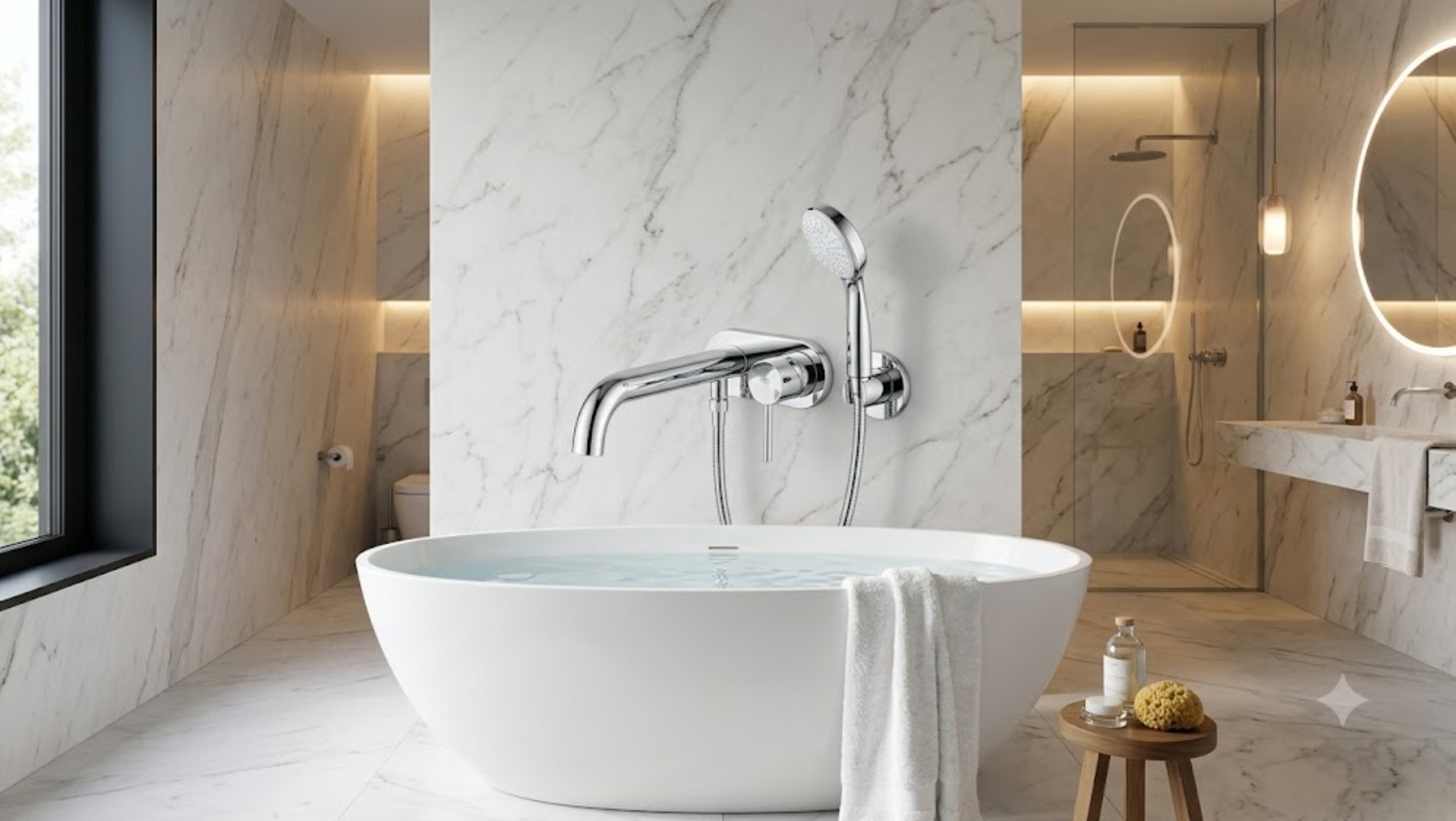
A Bath Shower Mixer is a bathroom fitting that combines the functions of a bath tap and a shower in one unit. It mixes hot and cold water to provide a comfortable temperature and usually includes a diverter that allows water to flow either through the bath spout or a handheld shower. This makes it a practical choice for bathrooms where users want both bathing and showering from the same fitting.
These mixers are available in different designs, including wall-mounted, deck-mounted, concealed, single-lever, and thermostatic models. The right choice depends on your bathroom layout, existing plumbing, water pressure, preferred style, and safety requirements. Understanding these differences before buying can help you choose a fitting that works reliably and suits your space.
What Is a Bath Shower Mixer?
A bath shower mixer works by combining hot and cold water inside a valve before sending the mixed water to the selected outlet. A diverter controls whether the water comes from the bath spout or the shower handset. Depending on the design, temperature and water flow may be controlled using a single lever, separate handles, or a thermostatic control.
One of the main advantages is convenience. Instead of installing separate controls for the bath and shower, a combined fitting provides both functions in one system. Some modern models also include ceramic cartridges, flow restrictors, temperature limiters, and non-return valves. These features can improve control, efficiency, and reliability. For example, manufacturers such as GROHE provide bath shower mixer models with different control and installation configurations.
Types of Bath Shower Mixers
The most common type is the deck-mounted bath shower mixer, which is fitted directly onto the bath or its surrounding deck. This design can work particularly well with freestanding or built-in baths that have suitable mounting holes. It keeps the plumbing relatively compact and can provide a neat appearance when the bath is designed for this type of installation.
A wall-mounted bath shower mixer is installed against the wall above or beside the bath. It is useful when the bath itself does not have suitable tap holes and can leave the bath rim clear. Another option is a concealed mixer, where much of the valve mechanism is positioned inside the wall. Concealed designs offer a minimalist appearance, but they require more careful planning because the internal plumbing must be positioned correctly before the wall is finished.
Key Features and Benefits
A major decision is whether to choose a manual or thermostatic mixer. With a manual model, you adjust the hot and cold water yourself. Thermostatic models use a temperature-control mechanism to maintain a more consistent water temperature when supply conditions change. This can make them particularly useful in family bathrooms where temperature stability is important.
Safety is another important consideration. Some thermostatic products include a preset temperature stop, commonly around 38°C, which helps prevent the user from accidentally selecting excessively hot water. The exact safety features vary between manufacturers and models, so it is important to check the product specifications rather than assuming every thermostatic mixer provides the same protection.
Other useful features include ceramic cartridges, automatic diverters, flow controls, non-return valves, temperature limiters, and easy-clean shower heads. A ceramic cartridge can provide smooth operation, while a good diverter makes switching between the bath outlet and handset easier. These features may increase the price, but they can also improve everyday usability and long-term convenience.
How to Choose a Bath Shower Mixer
Choosing the right model starts with your existing bathroom configuration. Before purchasing, check whether you need a wall-mounted or deck-mounted fitting and measure the existing connection points. For replacement projects, compatibility is particularly important because connection spacing, pipe orientation, and mounting dimensions can vary between products.
Water pressure should also be considered. Different mixers have different minimum and maximum pressure requirements, and the performance of a shower handset can depend heavily on the available water supply. Check the manufacturer’s technical specifications before buying, particularly if your property has a low-pressure water system. A mixer that looks suitable may not provide satisfactory shower performance if the water supply does not meet its requirements.
Design and finish are also worth considering, but they should come after technical compatibility. Chrome remains a common choice because it is versatile and relatively easy to coordinate with other bathroom fittings. Brushed finishes, black, and other contemporary options can create a more distinctive appearance. Whatever finish you choose, make sure the cleaning instructions are compatible with the products you plan to use.
Installation and Maintenance
Installation requirements depend heavily on the type of mixer. A simple replacement may be relatively straightforward when the new fitting matches the existing connections, while concealed systems can require significantly more work. Wall-mounted models also require accurate positioning and properly prepared pipe connections.
For a new installation or a concealed mixer, using a qualified plumber is generally advisable. Incorrect pipe positioning or unsuitable connections can lead to leaks, poor performance, or expensive corrective work. Always follow the manufacturer’s installation instructions because dimensions and connection requirements are not universal. For example, a particular GROHE model may specify a 150 mm centre-to-centre connection distance, but that measurement should never be assumed for every bath shower mixer.
Regular maintenance is usually straightforward. Clean the visible surfaces using products recommended by the manufacturer and avoid abrasive materials that can damage the finish. If the water flow becomes weaker, the temperature becomes inconsistent, or the diverter starts sticking, the fitting may need inspection. Depending on the design, filters, cartridges, seals, or thermostatic components may require cleaning or replacement.
Conclusion
A Bath Shower Mixer is a practical solution for combining bath filling and showering in one bathroom fitting. The main options include deck-mounted, wall-mounted, concealed, manual, and thermostatic designs, each offering different installation and control characteristics.
The best choice depends on more than appearance. Before buying, consider plumbing compatibility, water pressure, temperature control, safety features, installation requirements, and long-term maintenance. Choosing a suitable mixer from the beginning can provide better performance and make everyday bathroom use more convenient.
FAQs
What is a Bath Shower Mixer?
It is a bathroom fitting that combines a bath tap and shower outlet. It mixes hot and cold water and usually uses a diverter to switch between the bath spout and shower handset.
Is a thermostatic bath shower mixer better?
A thermostatic model can provide more consistent temperature control and may include safety features that reduce the risk of excessively hot water. Whether it is better depends on your needs and budget.
Can a bath shower mixer be installed on any bath?
No. The bath must have a suitable mounting arrangement and compatible plumbing connections for the selected model. Always check the manufacturer’s dimensions before purchasing.
How long does a bath shower mixer last?
A quality mixer can provide many years of service when correctly installed and maintained. Lifespan depends on product quality, water conditions, frequency of use, and maintenance.
