
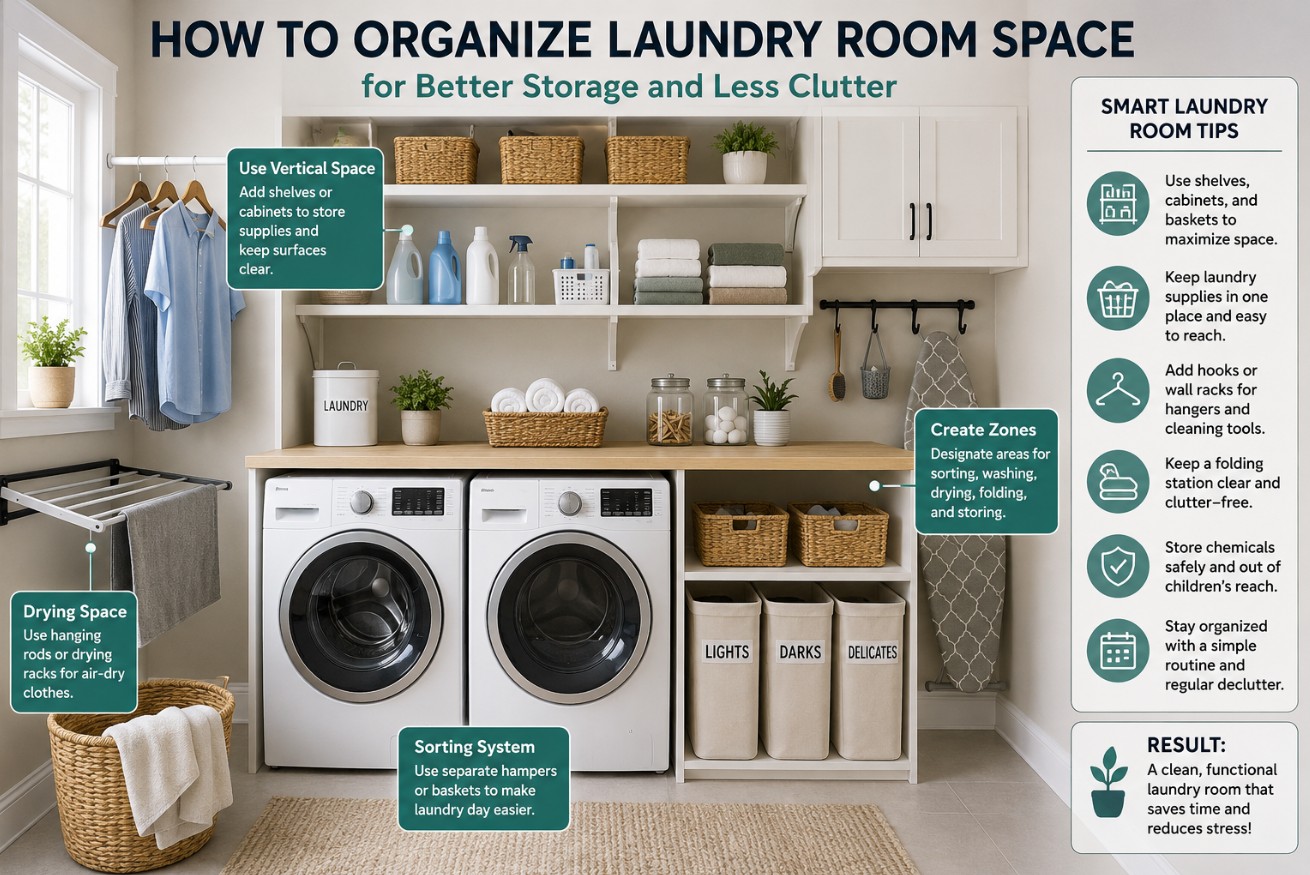
Laundry rooms often become cluttered because they are expected to handle more than washing clothes. Detergent, cleaning products, baskets, towels, ironing tools, spare household supplies, and piles of clothing can quickly compete for the same limited space. Knowing how to organize laundry room space properly helps turn that crowded area into a more efficient part of the home.
The goal is not to fill every wall with shelves or buy dozens of matching containers. A practical laundry room should support the way you actually work: sorting dirty clothes, treating stains, washing, drying, folding, hanging, and putting items away. Once those steps have clear places, keeping the room organized becomes much easier.
Plan Your Laundry Room Around a Simple Workflow
Start by looking at how laundry moves through the room. The most practical sequence is usually sort, wash, dry, fold, and store. Frequently used items should sit close to the stage where they are needed. Detergent and stain remover belong near the washer, while hangers and drying racks are more useful beside the dryer.
Before buying organizers, remove anything that does not genuinely need to live in the laundry room. Group the remaining items by purpose, such as washing supplies, garment-care tools, towels, cleaning products, and spare household stock. This simple step often creates more usable space than adding another cabinet.
Also consider movement around your washer and dryer. Doors should open fully, laundry baskets should have somewhere to sit, and you should be able to reach appliance controls without shifting other items. If your laundry area is narrow, keeping the main walking path open is more valuable than squeezing additional storage onto the floor.
A good layout should also leave access to hoses, vents, outlets, and appliance connections. Avoid placing permanent shelves or carts so tightly around machines that routine maintenance becomes difficult. Always follow the installation clearance requirements for your specific washer and dryer.
Use Vertical Space and Smart Storage Solutions
When floor space is limited, walls become the most useful storage area. Shelves or cabinets above the washer and dryer can hold detergent, fabric-care products, baskets, and extra supplies without interfering with movement. Adjustable shelving is especially useful because you can change shelf heights when your storage needs change.
Closed cabinets are ideal for products you would rather keep out of sight, while open shelves work well for towels, baskets, and everyday supplies. A combination of both often gives the best result. Keep frequently used products at an easy-to-reach height and reserve the highest shelves for backup items that you only need occasionally.
Do not overlook narrow gaps beside appliances. A slim rolling cart can hold bottles, brushes, clothespins, and small cleaning supplies while sliding neatly into unused space. Hooks mounted on walls or the back of a door can also hold reusable bags, hangers, ironing accessories, or lightweight tools.
For a small laundry room or laundry closet, multifunctional storage matters even more. A shelf can double as a folding surface, a wall-mounted drying rack can fold away when not in use, and a stackable washer-dryer setup may free floor space when the appliances are designed for stacking. Avoid forcing storage into every gap; the room should still feel easy to use.
Create Practical Zones for Sorting, Folding, and Drying
A clear sorting system can prevent dirty clothes from becoming one large pile. Use separate hampers or divided laundry baskets for categories that make sense for your household, such as lights, darks, delicates, towels, or children’s clothing. Sorting as clothes arrive in the laundry area can save time when you are ready to start a load.
The system does not need to be complicated. Two or three baskets are often enough. Labels can help in a shared household, but only use them where they make the process clearer. If baskets are constantly blocking the walkway, consider wheeled hampers, collapsible baskets, or pull-out storage beneath a countertop.
A dedicated folding surface is another major improvement. If you have compatible front-loading machines, a countertop above them can create a generous work area without using additional floor space. In smaller rooms, a narrow table, rolling cart, or fold-down wall surface can provide enough room for folding while remaining easy to store.
You should also create a place for garments that cannot go directly into the dryer. A retractable drying rack, wall-mounted rail, or hanging rod makes it easier to air-dry delicate clothing without draping it over doors or furniture. Positioning the drying area close to the washer or dryer keeps the workflow simple.
Organize Laundry Supplies Safely and Efficiently
Laundry products are easier to manage when similar items are stored together. Keep detergent, stain treatment, dryer products, and garment-care tools in defined areas instead of spreading them across multiple shelves. Smaller accessories can go into baskets or bins, while extra stock can be kept higher up or farther from the main work area.
Safety should take priority over appearance. Detergents, bleach, and laundry pods should be stored securely and kept away from children. Keep hazardous products in their original labeled containers rather than transferring them into decorative jars that could create confusion.
The dryer area also needs regular attention. Lint can become a fire hazard when it accumulates, so empty the lint filter as recommended and keep the area around the appliance easy to clean. The U.S. Fire Administration advises keeping dryer systems clean and properly maintained as part of reducing household fire risk.
Avoid turning the top of the washer or dryer into permanent storage. Bottles, baskets, and miscellaneous household items can quickly take over these surfaces and make routine cleaning harder. If products repeatedly collect there, that is usually a sign that they need a designated shelf, cabinet, or container.
Keep Your Laundry Room Clutter-Free Long Term
An organized laundry room works best when every commonly used item has an obvious home. Store everyday products where they can be reached quickly and keep extras in a separate backup area. When something is easy to return to its proper place, clutter is less likely to build up.
Try to keep your folding surface clear when it is not being used. Countertops often become dumping grounds for mail, cleaning products, empty baskets, and items waiting to be repaired. A simple rule that the folding area stays empty between laundry sessions can make the entire room feel more organized.
Regularly check supplies as well. Remove empty containers, expired products, damaged hangers, and items you no longer use. Buying several months of detergent may save money, but bulk supplies should not occupy the most accessible storage space if you only reach for them occasionally.
Your laundry routine also affects organization. Smaller, regular loads may be easier to manage than allowing dirty and clean clothes to accumulate for several days. The best laundry room system is one that fits your household habits and requires very little effort to maintain.
Conclusion
Learning how to organize laundry room space effectively is mainly about improving workflow, not adding more storage. Start by removing unnecessary items, then create clear areas for sorting, washing, drying, folding, and storing clothes.
Use vertical space where possible, keep frequently used supplies easy to reach, and choose storage that fits your actual routines. With a simple system and regular maintenance, even a compact laundry room can stay functional, safe, and noticeably less cluttered.
FAQs
How do I organize a small laundry room?
Use wall shelves, upper cabinets, slim rolling carts, hooks, and fold-away drying racks. Prioritize vertical storage so you can keep the floor and walking path clear.
What should I store above the washer and dryer?
Store detergent, stain products, towels, baskets, and backup supplies on shelves or in cabinets. Keep heavier or frequently used items within comfortable reach.
How can I organize a laundry room without cabinets?
Use open shelving, baskets, rolling carts, wall hooks, peg rails, and over-door storage. These options provide useful organization without requiring built-in cabinetry.
What is the best way to organize dirty laundry?
Use two or three separate hampers for categories you regularly wash differently, such as lights, darks, delicates, or towels. Sorting clothes as they enter the laundry room saves time later.
