
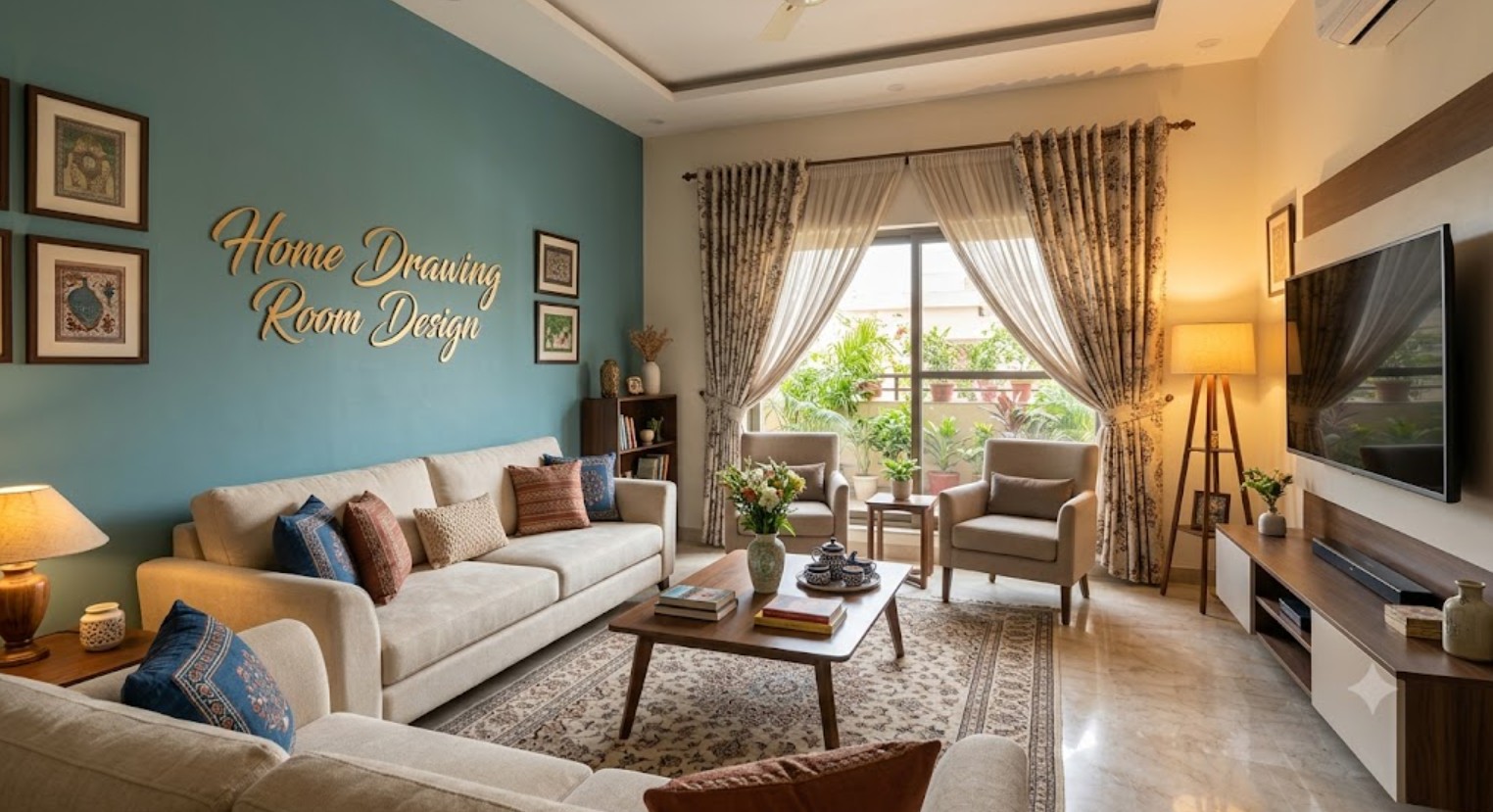
A well-planned Home Drawing Room Design creates a strong first impression. In many homes, the drawing room is the space where guests are welcomed, conversations begin, and the overall taste of the home becomes visible. It should feel polished, but not stiff. It should look elegant, but still be comfortable enough for people to sit and talk naturally.
The best drawing room design balances layout, furniture, lighting, colours, textures, and decor. A beautiful sofa alone cannot make the room work. The space also needs good movement, comfortable seating, practical tables, layered lighting, and a focal point that gives the room character. When these details come together, the drawing room feels stylish, warm, and easy to use.
What Makes a Home Drawing Room Different?
A drawing room is usually more formal than a regular living room. A living room is often used by the family every day for watching TV, relaxing, or casual activities. A drawing room, on the other hand, is usually arranged for guests, formal sitting, and social conversation. This is why it often needs a cleaner layout and a more presentable design.
That does not mean the room should feel cold or unused. A good drawing room should still feel inviting. Guests should be able to sit comfortably, place a cup on a nearby table, and enjoy the space without feeling like they are sitting in a showroom. The best design feels refined, but also human.
In many South Asian homes, the drawing room is close to the main entrance. This makes it a key part of the home’s identity. Visitors often see this room before any other space, so the furniture, wall design, curtains, and lighting should work together to create a neat and welcoming look.
A strong Home Drawing Room Design starts with a clear purpose. Before buying furniture or choosing paint, decide how the room will be used. Will it be only for guests? Will the family also use it? Will there be a TV? These answers help shape the layout and prevent design mistakes later.
Best Home Drawing Room Design Layouts for Guests
The most effective drawing room layout is usually conversation-focused. Instead of placing every seat toward a television, arrange sofas and chairs so people can face each other easily. A main sofa with two accent chairs works well in many homes. Add a centre table and side tables to make the seating area practical.
For small drawing rooms, avoid oversized sectionals and heavy furniture. A slim two-seater sofa, two compact chairs, and a round centre table can make the room feel open. In narrow rooms, place the longest sofa against the longer wall and keep the walkway clear. This helps the space feel structured without blocking movement.
For larger rooms, you can create a more formal arrangement. Two sofas facing each other can look balanced and elegant. Another option is one sofa with a pair of armchairs across from it. A large rug should anchor the seating zone so the furniture does not look scattered.
Good layout planning is also about traffic flow. People should be able to enter, sit, and move around without squeezing between furniture. Interior design sources such as Architectural Digest often highlight the importance of proportion, balance, and practical arrangement in living spaces. These principles matter even more in a guest-facing drawing room.
Furniture, Seating, and Comfort Essentials
Furniture should match the size of the room. A large sofa may look impressive in a showroom, but it can overpower a compact drawing room. Choose pieces that leave enough breathing space around them. Sofas with visible legs, slim arms, and medium height often work better in smaller homes because they look lighter.
Comfort is also important. A drawing room may be formal, but guests should not feel uncomfortable. Choose sofas and chairs with supportive backs, soft cushions, and durable fabric. If the room is used often, avoid materials that stain too easily or require constant maintenance.
A centre table is usually the heart of the seating area. It should be large enough for tea, books, decor, or serving trays, but not so large that it blocks movement. Side tables are equally useful because guests need a place to keep drinks, phones, or small items.
A console table can also improve the look of the room. Place it behind a sofa, near the entrance, or against a feature wall. Add a mirror, lamp, vase, or framed artwork above it for a polished effect. These small details make the room feel finished without overcrowding it.
Colours, Lighting, and Wall Decor Ideas
Neutral colours are a safe and elegant base for drawing rooms. Cream, beige, warm white, taupe, greige, and soft grey can make the room feel calm and spacious. These shades also work well with wood, brass, black accents, and textured fabrics. If you want a richer look, add one deeper accent colour such as navy, olive green, chocolate brown, or emerald.
The best Home Drawing Room Design does not depend on colour alone. Texture is just as important. Use a mix of fabric, wood, metal, glass, stone, or woven materials to make the room feel layered. For example, a beige sofa can look plain by itself, but it becomes more interesting with a textured rug, wooden table, brass lamp, and patterned cushions.
Lighting should come from more than one source. A ceiling light gives general brightness, but it is rarely enough. Add table lamps, floor lamps, wall sconces, or picture lights to create warmth. Soft lighting near seating areas makes the room feel more relaxed during evening conversations.
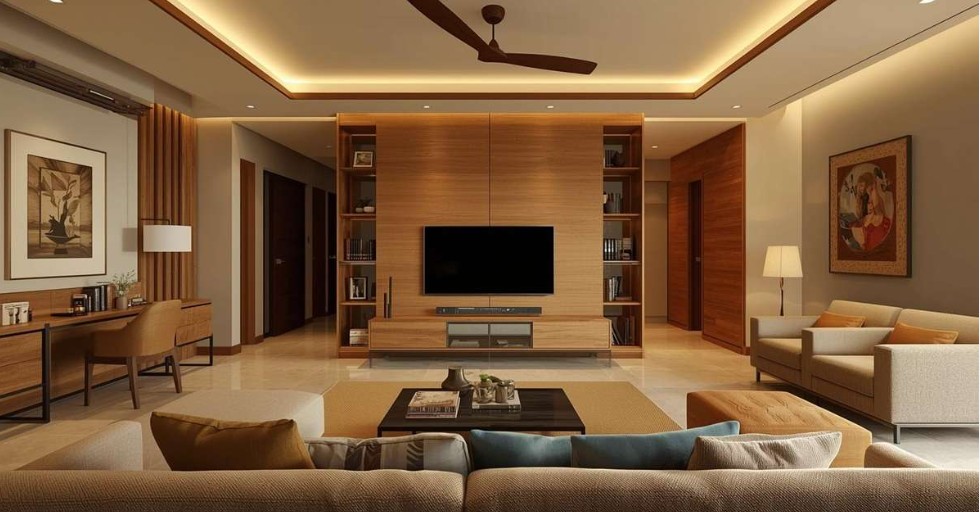
Wall decor gives the drawing room personality. One feature wall is usually enough for most homes. You can use framed art, wall moulding, wallpaper, a large mirror, fluted panels, or a stone-look accent. Avoid filling every wall with heavy decoration. A clean wall with one strong focal point often looks more expensive than a crowded wall.
Common Drawing Room Design Mistakes to Avoid
One common mistake is pushing all furniture against the walls. This can make the middle of the room feel empty and disconnected. In many cases, pulling chairs or sofas slightly inward creates a better conversation zone. A rug can help define this area and make the furniture feel connected.
Another mistake is using a rug that is too small. A tiny rug under only the centre table can make the whole room look unfinished. Ideally, at least the front legs of the sofa and chairs should sit on the rug. This creates a more balanced and intentional layout.
Overmatching is another issue. Buying a complete furniture set with the same sofa, chairs, tables, and finishes can make the room feel flat. A more natural design mixes pieces that complement each other without looking identical. For example, pair a plain sofa with textured chairs or a wooden table with a metal lamp.
Poor lighting can also ruin a good room. Bright white ceiling lights can feel harsh, while too little light can make the room dull. Warm layered lighting works better for a guest space. It highlights the decor, softens the mood, and makes the room more comfortable.
Conclusion
The best Home Drawing Room Design is stylish, comfortable, and guest-friendly. It should have a clear layout, balanced seating, practical tables, warm lighting, and a strong focal point. The room should look presentable without feeling stiff or overdecorated.
Start with the purpose of the space, then choose furniture and decor that fit the room size. Use neutral colours, layered lighting, quality fabrics, and thoughtful wall details to create a refined look. A good drawing room does not need to be overly expensive. It needs to be well planned, balanced, and comfortable for real use.
FAQs
1. What is the best layout for a drawing room?
The best layout is usually conversation-focused. A sofa with two accent chairs, a centre table, and a rug works well for most homes.
2. Which colours are best for a drawing room?
Warm neutrals such as beige, cream, taupe, greige, and soft grey are safe choices. You can add navy, olive, brown, or gold accents for depth.
3. How can I make a small drawing room look bigger?
Use slim furniture, light curtains, a large mirror, visible-leg chairs, and one main feature wall. Avoid bulky sofas and oversized TV units.
4. What should every drawing room include?
A drawing room should include comfortable seating, a centre table, side tables, good lighting, a rug, curtains, and one focal decor element.
