
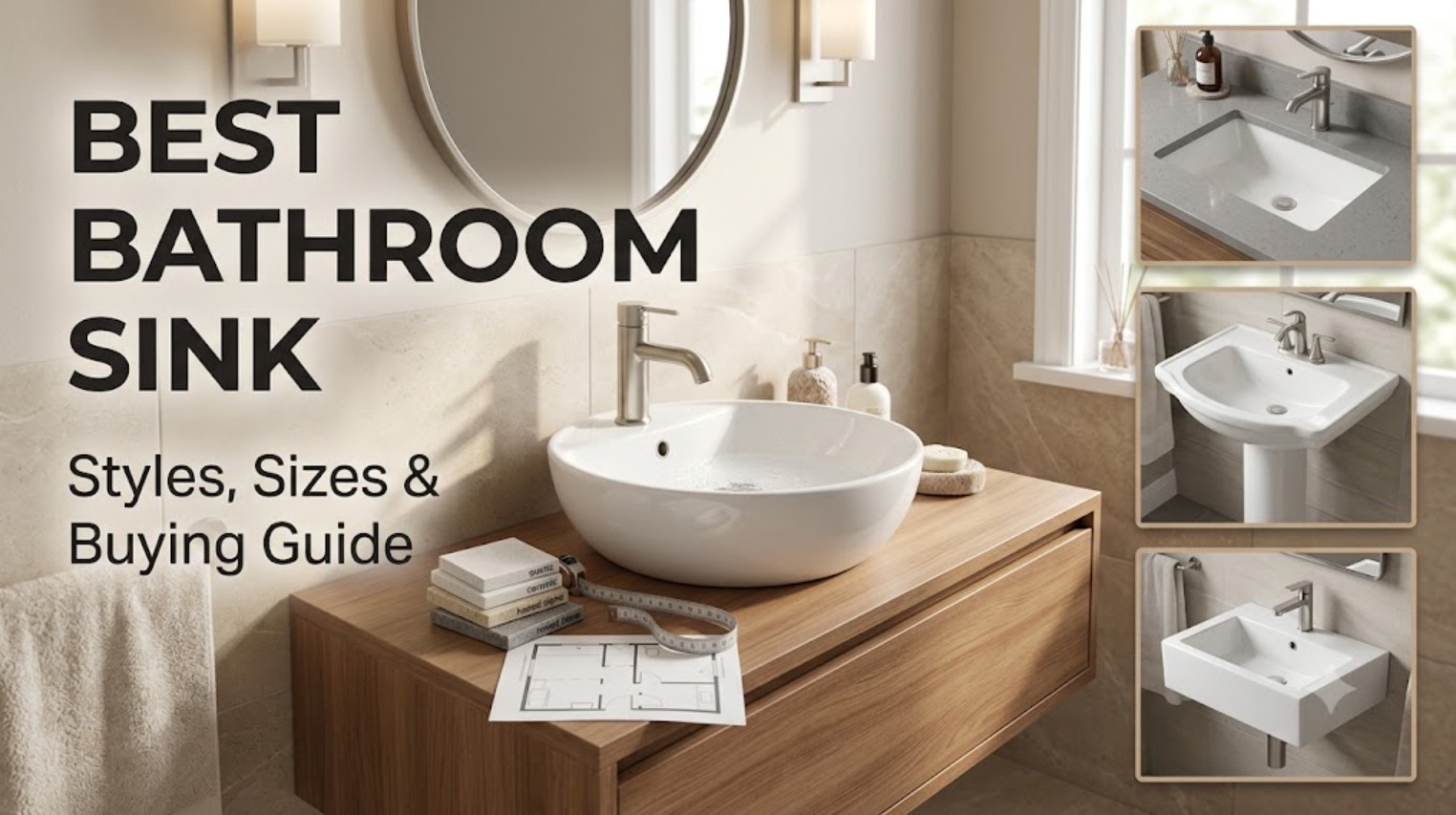
Choosing the right bathroom sink is not only about style. The basin must fit the room, work with the vanity, connect properly to the plumbing, and remain comfortable for everyday use. A sink that looks attractive in a showroom may feel too shallow, sit too high, or take up more counter space than expected once it is installed.
The best bathroom sink depends on the size of the room, the people using it, the available storage, and the level of maintenance you are willing to manage. A compact powder room has different needs from a shared family bathroom or a large primary suite. Understanding sink types, dimensions, materials, faucet compatibility, and installation costs will help you make a practical choice.
Compare the Main Bathroom Sink Types
Bathroom sinks are available in several mounting styles, and each one offers a different balance of appearance, storage, and ease of installation. Undermount sinks attach below the countertop, creating a smooth surface that is easy to wipe clean. Drop-in sinks sit inside a cutout, with a visible rim resting on the counter. They are usually affordable, widely available, and easier to replace than many other designs.
An integrated sink combines the basin and countertop into one continuous piece. This reduces seams where water, soap, and dirt can collect. Integrated designs are often used in modern bathrooms and are especially practical for households that want simple cleaning. However, if the basin becomes damaged, replacing only the sink may be difficult.
Pedestal and wall-mounted sinks are useful where floor space is limited. A pedestal sink creates an open, traditional look, but it provides almost no storage or counter space. A wall-mounted sink leaves the floor visible and can make a small bathroom feel larger. It may also suit an accessible layout when installed with appropriate knee clearance and proper wall support.
Vessel sinks sit above the countertop and create a strong visual feature. They are available in ceramic, glass, stone, and metal finishes. However, the countertop height, faucet reach, and basin depth must be planned carefully. A poorly matched vessel sink can sit too high or cause water to splash onto the surrounding surface.
Choose the Right Size and Mounting Style
There is no single standard bathroom sink size. Many round basins measure approximately 16 to 20 inches in diameter, while rectangular models commonly range from about 19 to 24 inches wide. Bowl depth often falls between 5 and 8 inches, although compact and decorative models may be shallower.
Before buying, measure the countertop width, cabinet depth, available wall space, and the distance between the sink and nearby doors or fixtures. Also check the position of the drainpipe and water-supply lines. A sink that does not align with the existing plumbing may require additional labor and modifications.
The finished height is just as important as the basin dimensions. A typical vanity may be around 30 to 36 inches high, but an above-counter vessel sink adds several more inches. This can make the rim uncomfortable for shorter users if the vanity was not designed for that style.
Mounting style should also match the countertop material. Undermount sinks work best with solid surfaces such as stone, quartz, or solid-surface materials because the cut edge remains visible. They are usually unsuitable for standard laminate counters unless the product is specifically designed for that application. Drop-in sinks are more flexible because the rim covers the countertop opening.
In a small bathroom, a narrow wall-mounted basin or compact vanity sink may provide enough washing space without blocking movement. In a shared bathroom, a wider basin or double-sink vanity may reduce congestion. However, two sinks also reduce counter and storage space, so the layout should reflect how the room is actually used.
Select a Durable Bathroom Sink Material
Vitreous china and ceramic are among the most common bathroom sink materials. Their glazed surfaces are smooth, stain-resistant, and easy to clean. They also suit a wide range of bathroom styles. The main limitation is that the surface can chip if it is struck by a heavy object.
Enameled cast iron is heavier and more substantial. It offers excellent durability and a traditional appearance, but the supporting cabinet or wall must be strong enough to carry the weight. Damage to the enamel can expose the material underneath, so care is required during installation.
Glass vessel sinks provide a decorative, modern appearance, although they show water spots and soap residue more easily. Tempered glass should be cleaned with nonabrasive products to avoid scratching. Natural stone sinks offer unique colors and patterns, but most stone is porous and may require regular sealing.
Metal sinks, including stainless steel, copper, and brass, can create a distinctive look. Stainless steel is durable and corrosion-resistant, although it can show scratches and water marks. Copper and brass develop a natural patina over time, which may be desirable for some homeowners but unwanted by others.
Solid-surface and resin sinks are often used in integrated countertops. They provide a seamless look and are generally easy to maintain. Quality varies by product, so check resistance to heat, stains, chemicals, and impact before purchasing.
Match the Sink With the Faucet and Vanity
Sink and faucet compatibility is one of the most commonly overlooked parts of bathroom planning. Basins may have no faucet holes, one hole, three holes with 4-inch spacing, or wider three-hole arrangements. A wall-mounted faucet requires separate plumbing inside the wall and careful positioning above the bowl.
The faucet spout should extend far enough into the basin so that water lands near the drain rather than against the back wall or front edge. The spout should also sit high enough to provide handwashing space without creating excessive splashing. This is especially important with shallow vessel sinks.
A faucet with a very high spout can look elegant but may send water outside a small basin. A low faucet can feel cramped when paired with a deep sink. Check the manufacturer’s dimensions for spout height, reach, and recommended installation distance before ordering both products.
Water efficiency should also be considered. The U.S. Environmental Protection Agency states that WaterSense-labeled bathroom faucets use no more than 1.5 gallons per minute while meeting performance requirements. Choosing an efficient faucet can reduce water use without making normal handwashing inconvenient.
The vanity must provide enough internal space for the sink bowl, drain, P-trap, and supply lines. A deep undermount basin may occupy much of the cabinet and reduce usable storage. Drawers near the sink may also require special shapes or cutouts to avoid plumbing connections.
For a family bathroom, choose a vanity with durable surfaces and practical storage around the plumbing. In a powder room, visual impact may matter more than cabinet capacity. A floating vanity can make the floor appear more open, but it must be securely attached to the wall.
Balance Cost, Maintenance, and Daily Use
Bathroom sink prices vary according to material, brand, size, and design. A basic ceramic drop-in sink may cost less than $100, while premium vessel, stone, or custom integrated models can cost several hundred dollars or more. The sink itself is only one part of the total expense.
Professional installation may include removing the existing fixture, modifying the countertop, adjusting plumbing, installing the faucet, reconnecting the drain, and sealing the basin. A straightforward replacement is usually less expensive than a project involving drain relocation, new supply lines, or wall reinforcement.
Maintenance should influence the decision as much as appearance. A sink used by children or multiple family members should resist stains, scratches, and frequent cleaning. Ceramic, vitreous china, and integrated solid-surface sinks are usually practical choices for busy bathrooms.
Decorative materials may require more attention. Glass shows water marks, stone may need sealing, and polished metal can reveal fingerprints and mineral deposits. A highly detailed vessel sink may also be harder to clean around the base than an undermount basin.
Think about how the bathroom is used each day. If counter space is important, an undermount or integrated sink may be the best option. If storage is less important and the room is very small, a pedestal or wall-mounted design may work better. For accessibility, an open-below sink with suitable height, knee clearance, and protected plumbing may be more appropriate.
Conclusion
The best bathroom sink is the one that fits the room, supports daily routines, and works with the existing vanity and plumbing. Undermount and integrated sinks are practical for easy cleaning, while drop-in models offer flexible installation and good value. Pedestal and wall-mounted sinks suit compact spaces, and vessel sinks provide a stronger design statement.
Before buying, confirm the dimensions, mounting method, faucet configuration, drain type, countertop compatibility, and storage impact. Choosing a durable material and a properly matched faucet will usually provide more long-term value than selecting a sink based only on appearance.
Frequently Asked Questions
What is the most practical bathroom sink?
An undermount or integrated ceramic sink is practical for most households because it is durable, easy to clean, and compatible with many vanity designs.
What is the best sink for a small bathroom?
A wall-mounted sink, compact vanity basin, corner sink, or pedestal sink can save space. The best option depends on whether storage is required.
Are vessel sinks difficult to maintain?
They can require more cleaning around the base and may show water spots. Correct faucet height and spout reach are also important to prevent splashing.
How do I know whether a sink will fit my vanity?
Measure the vanity width, depth, internal cabinet space, countertop opening, and plumbing locations. Compare those measurements with the sink’s installation specifications.
