
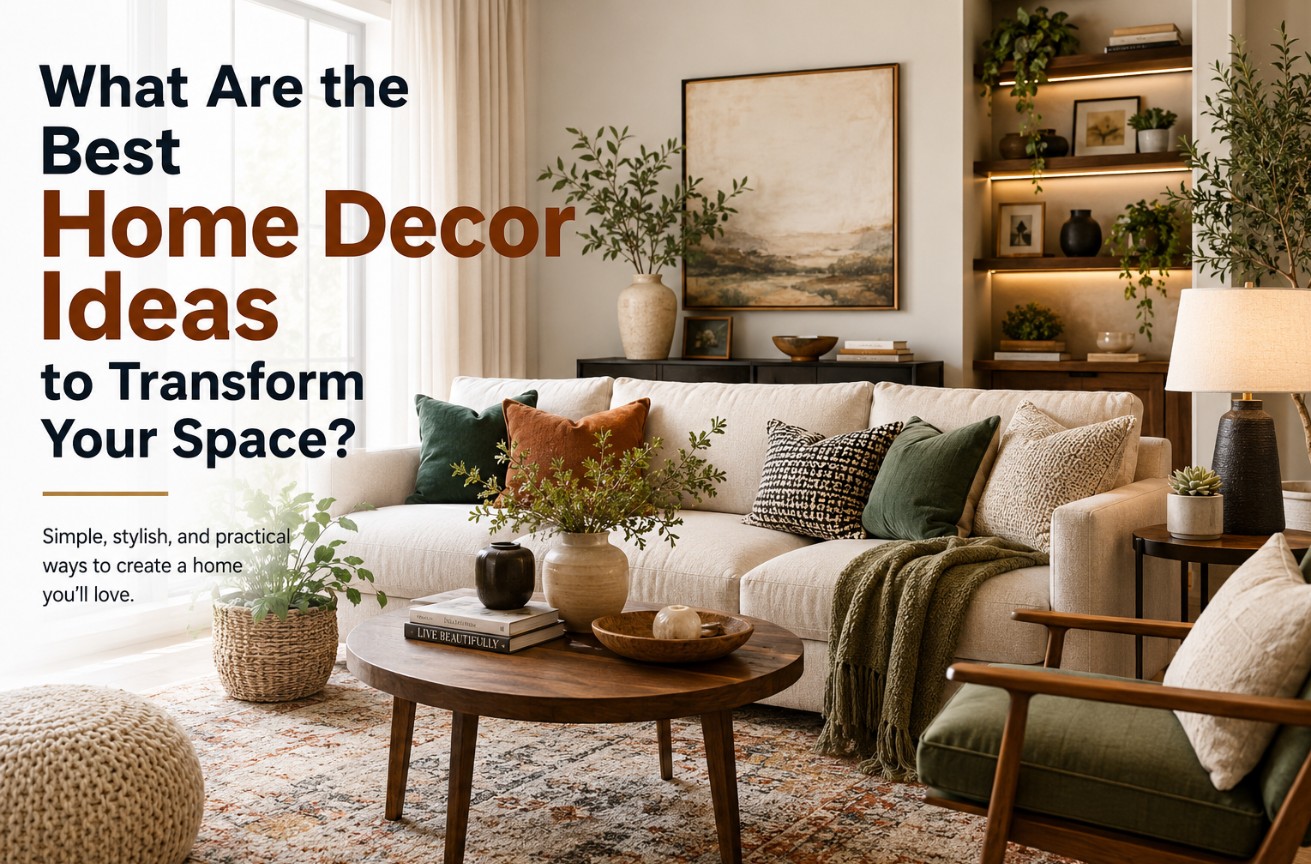
A well-decorated home does more than look attractive. It can make everyday spaces feel more comfortable, practical, and personal. The best home decor ideas are not necessarily the most expensive ones. Small changes such as improving lighting, rearranging furniture, adding artwork, or introducing natural textures can completely change how a room feels. The goal is to create a space that reflects your lifestyle while remaining comfortable and functional.
Interior decorating is also becoming more personal and less focused on perfectly matched furniture or rigid design rules. Warm colors, natural materials, layered fabrics, meaningful accessories, and a mix of old and new pieces can give a home character without making it feel cluttered. Whether you are refreshing a living room, updating a bedroom, or trying to make a small apartment feel more spacious, thoughtful design choices can make a noticeable difference.
How Can Simple Home Decor Ideas Make a Big Difference?
You do not need a complete renovation to improve the appearance of your home. Some of the most effective changes involve working with what you already have. Moving furniture to improve the flow of a room, replacing worn cushions, adding a larger rug, changing lamps, or displaying a few carefully chosen decorative objects can refresh a space without requiring a major investment. Even removing unnecessary items can help important furniture and accessories stand out.
Wall decor can also change the character of a room quickly. Instead of leaving large walls empty, consider artwork, framed photographs, mirrors, floating shelves, or decorative panels. A large piece of art can create a strong focal point, while a collection of smaller frames can make a room feel more personal. Plants, books, pottery, candles, and travel souvenirs can add another layer of personality when used selectively rather than filling every available surface.
What Are the Best Home Decor Ideas for Each Room?
In the living room, begin with comfort and layout. A well-sized rug can visually connect the sofa, chairs, and coffee table, while cushions and throws can introduce color and texture. Layered lighting also works especially well in living spaces. Instead of relying only on a ceiling fixture, combine a floor lamp, table lamps, or wall sconces. Artwork, books, greenery, and a few personal objects can complete the room without making it feel overdecorated.
Bedrooms benefit from a softer and more relaxing approach. Comfortable bedding, warm bedside lighting, curtains, a rug, and a strong headboard can make the space feel more complete. In kitchens and bathrooms, smaller decorative upgrades often have a large visual impact. Updating cabinet hardware, mirrors, lighting, towels, stools, or accessories can refresh these rooms without replacing expensive fixtures. For additional inspiration, Architectural Digest’s interior design ideas offer useful examples of how professionals combine furniture, lighting, art, materials, and architectural details.
How Do You Choose Colors, Textures, and Lighting?
A balanced color palette helps a room feel connected rather than random. Start with one main neutral or dominant shade, then introduce one or two supporting colors through upholstery, cushions, curtains, rugs, artwork, or smaller accessories. Warm whites, beige, taupe, soft brown, muted green, deep blue, terracotta, and earthy tones are versatile options. You do not need every item to match exactly; slight variations often make a room feel more natural and layered.
Texture and lighting are equally important. Combining wood, linen, wool, stone, metal, ceramics, glass, and woven materials creates visual depth, especially in rooms with a simple color scheme. Lighting should include both practical and atmospheric sources. Ceiling lights provide general illumination, while lamps and sconces can make evenings feel warmer and more comfortable. Natural daylight should also be considered when choosing paint colors because the same shade can appear very different in bright and low-light rooms.
How Can You Decorate a Small Space Without Making It Feel Crowded?
Small rooms require careful decisions rather than simply using smaller versions of everything. Choose furniture that fits the proportions of the room and leaves enough space to move comfortably. Multifunctional pieces such as storage ottomans, nesting tables, benches with hidden storage, and beds with drawers can reduce clutter. Floating shelves and wall-mounted lighting also free up valuable floor and surface space.
Mirrors are another useful decorating tool because they reflect light and can make a compact room feel more open. Vertical elements, such as tall bookcases or curtains hung close to the ceiling, can draw the eye upward and improve the sense of height. At the same time, avoid filling every wall and corner. Leaving some visual breathing space can make a small interior feel calmer, cleaner, and more intentional.
Which Home Decor Trends Are Worth Considering in 2026?
Many current home decor ideas focus on warmth, individuality, and natural materials rather than overly polished or identical interiors. Warm woods, stone, handmade ceramics, woven details, textured fabrics, vintage furniture, and statement lighting can make a home feel collected rather than staged. Curved furniture, richer colors, decorative molding, and expressive artwork are also being used to bring more personality into contemporary homes.
Trends are most useful when they complement your lifestyle rather than dictate the entire design. Instead of replacing everything whenever a new style becomes popular, introduce trends through smaller elements that are easier to update. A new lamp, cushion, paint color, side table, rug, or piece of artwork can make a room feel current without creating unnecessary expense. Timeless furniture, quality materials, practical layouts, and personal objects usually provide a stronger foundation than decorating purely around short-lived trends.
Conclusion
The best home interiors are created through thoughtful choices rather than expensive purchases. Good home decor ideas combine comfort, proportion, color, texture, lighting, storage, and personality in a way that supports everyday life. Start with the parts of a room that affect how you use it, then add decorative details gradually.
Whether you are decorating a large house or a compact apartment, focus on creating balance rather than following every design trend. A room that includes practical furniture, good lighting, meaningful accessories, and materials you genuinely enjoy is more likely to remain appealing over time.
FAQs
What are some inexpensive home decor ideas?
Rearrange existing furniture, add cushions, update lamps, display artwork, introduce plants, replace small accessories, or repaint a wall. These changes can refresh a room without a large budget.
How can I make my home look more stylish?
Use a coordinated color palette, choose appropriately sized furniture and rugs, improve lighting, add texture, and avoid overcrowding surfaces with decorative items.
How do I decorate a small living room?
Choose multifunctional furniture, use vertical storage, add mirrors, keep pathways clear, and select a rug large enough to visually connect the main seating area.
What home decor colors are popular in 2026?
Warm neutrals, earthy browns, muted greens, terracotta, deep blues, burgundy, and other richer natural tones are appearing frequently in current interiors.
