
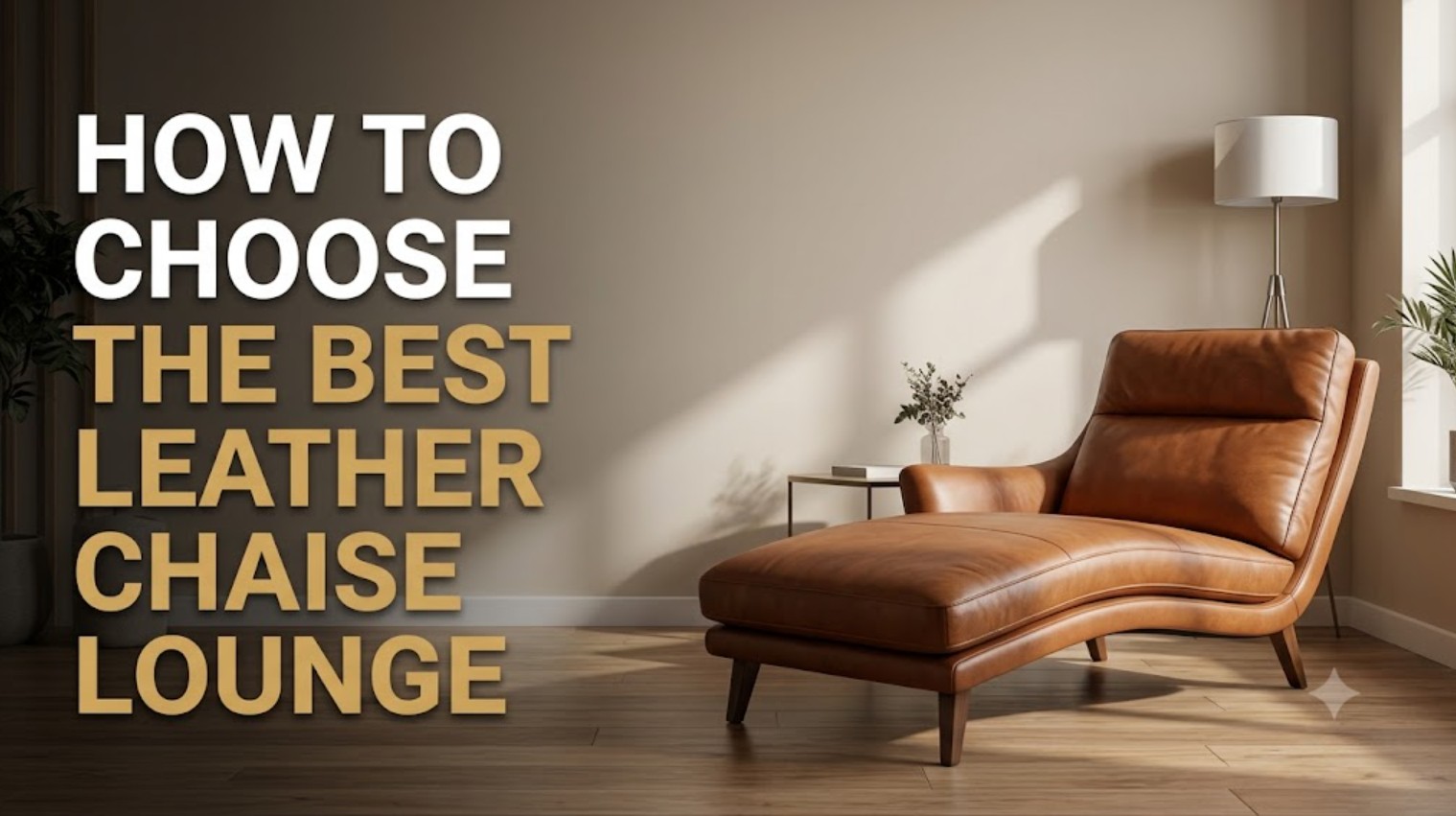
A leather chaise lounge can add comfortable seating, visual character, and a dedicated place to relax. Its extended seat supports the legs, making it suitable for reading, watching television, taking a short nap, or simply unwinding at the end of the day. It can work as a standalone accent piece in a bedroom or reading corner, or as part of a larger sectional sofa in a living room.
Choosing the right chaise, however, requires more than selecting an attractive colour. You need to consider the available floor space, leather finish, frame quality, seat depth, cushion firmness, orientation, maintenance requirements, and warranty. A chaise that looks impressive online may feel uncomfortable or overwhelm the room once delivered. The following guide explains how to evaluate these details and choose a piece that suits your home and everyday routine.
Measure Your Space Before Choosing a Chaise
Begin by measuring the area where the chaise will be placed. Record the available width, length, and height, then mark the proposed footprint on the floor with painter’s tape. This simple step helps you understand how much space the furniture will occupy and whether it will interfere with doors, cabinets, radiators, windows, or walking routes. Remember that a chaise may be narrower than a sofa but can extend much farther into the room.
You should also measure the complete delivery route. Check doorways, hallways, staircases, lifts, and tight corners. Compare these measurements with the product’s overall width, height, depth, and diagonal depth. Removable legs can make delivery easier, but they do not solve every access problem. Custom-made or made-to-order furniture may not be returnable simply because it does not fit through the entrance.
Orientation is especially important when buying a sectional chaise. A left-arm-facing model has the arm on your left when you stand in front of it, while a right-arm-facing model has the arm on your right. Confirm this before ordering, because choosing the wrong side can block the main walkway or place the chaise extension in an inconvenient position.
Also examine the usable seating area rather than relying only on the external dimensions. Thick arms, oversized back cushions, and curved frames can reduce the space available for reclining. Taller users may need a longer seat, while a very deep model may be uncomfortable for shorter users without an additional lumbar cushion.
Understand Leather Types and Upholstery Quality
Not all leather upholstery offers the same appearance, durability, or maintenance level. Full-grain leather keeps the natural surface of the hide, including subtle marks and variations. It can develop an attractive patina over time, but lightly protected full-grain leather may show spills and scratches more easily. Top-grain leather comes from the upper part of the hide and may be lightly corrected or finished to create a more consistent appearance.
Aniline leather has a soft, natural feel and clearly visible grain. It is often chosen for its rich character, but it absorbs moisture and oils more readily than protected leather. Semi-aniline leather has a light protective coating that improves colour consistency and stain resistance while maintaining much of the natural texture. Pigmented or protected leather has a stronger surface finish, making it a practical option for busy households, children, or regular entertaining.
Corrected-grain leather is sanded or buffed to reduce visible imperfections before a finish is applied. It usually has a more uniform colour and is easier to maintain, although it may not develop the same depth of patina as aniline leather. Split leather comes from a lower layer of the hide and is generally less expensive. Bonded leather is made from leather fibres mixed with binding materials, while faux leather is normally a coated synthetic textile.
Do not rely on broad labels such as “genuine leather,” “premium leather,” or “Italian leather.” These terms do not explain the grain, finish, thickness, or percentage of leather coverage. Ask the retailer whether the chaise is upholstered in leather on all visible surfaces or whether synthetic material is used on the back and sides. Buyers who want information about responsible leather manufacturing can also review the official Leather Working Group certification standards, which assess areas such as chemical management, water use, energy use, and production traceability.
Check the Frame, Suspension, and Cushion Construction
The internal construction has a major influence on how long a chaise remains supportive. A strong frame may use kiln-dried hardwood, engineered hardwood, metal, or a combination of materials. Kiln drying helps reduce moisture in the wood, limiting the risk of warping. Reinforced corner blocks and secure joints can also improve stability. Be cautious when a retailer gives detailed information about the upholstery but provides no description of the frame.
The suspension system sits beneath the seat cushions and distributes the user’s weight. Common systems include sinuous steel springs, webbing, grid-style supports, and traditional hand-tied springs. None of these methods is automatically superior in every design. The quality of the materials, spacing, tension, and installation are more important than the name of the system alone.
Cushion construction affects both comfort and appearance. High-resilience foam usually provides firmer support and better shape retention. Foam wrapped in fibre creates a softer surface without requiring extensive maintenance. Feather or down-wrapped cushions feel more relaxed, but they need regular fluffing and may develop a casual, slightly rumpled appearance. Innerspring cushions can provide additional support, particularly in deeper seating.
Inspect the stitching and tailoring as well. Seams should be straight and secure, especially around corners and high-stress areas. Tufting should appear evenly spaced, and piping should follow the shape of the chaise without excessive puckering. Natural wrinkles, scars, and tonal differences are normal in real leather, but loose stitching, peeling surfaces, exposed staples, or uneven cushion filling may indicate poor workmanship.
Match the Design to Your Comfort and Lifestyle
A chaise should support the way you intend to use it. For reading, look for a supportive backrest, moderate recline, and enough seat depth to stretch out without sliding forward. A small lumbar cushion may improve lower-back support. For napping, a longer and wider seat with softer cushioning may be more comfortable. A low-profile sculptural chaise may look elegant, but it can be difficult to enter and exit for users with limited knee or hip mobility.
Seat height is another practical consideration. A higher seat generally makes standing easier, while a lower seat creates a relaxed, modern appearance. Firm cushions offer stronger support and maintain a tailored shape. Softer cushions allow the body to sink in but may require more adjustment. Whenever possible, sit on the chaise before purchasing or choose a retailer with a clear return policy.
The style should also complement the room rather than competing with it. A tufted brown leather chaise works well in traditional, industrial, or library-inspired interiors. Black leather can create a sharper contemporary look, while tan, cognac, cream, or muted green leather may feel warmer and less formal. Curved chaises suit modern spaces, whereas rolled arms, turned legs, and nailhead trim create a classic appearance.
Consider how the colour will age. Dark leather can show dust, light pet hair, and surface scratches, while very pale leather may reveal dye transfer from clothing. Mid-tone brown, tan, or distressed finishes often conceal daily wear more naturally. Request a leather swatch and examine it in both daylight and artificial lighting before making a final decision.
Compare Maintenance, Price, and Warranty Terms
Leather requires regular but generally straightforward care. Dust the chaise with a soft cloth or vacuum it using a suitable upholstery attachment. Blot spills promptly instead of rubbing them into the surface. Avoid bleach, ammonia, furniture polish, abrasive cleaners, and unapproved oils. Cleaning instructions can differ between aniline, nubuck, semi-aniline, and protected leather, so always follow the manufacturer’s guidance.
Position the chaise away from strong direct sunlight, radiators, fireplaces, and heating vents. Prolonged heat can dry the material, while sunlight may cause fading. Use only a conditioner recommended for the specific leather finish. Applying too much product or using an unsuitable treatment can darken the surface, create uneven patches, or damage the protective coating.
Price should be assessed alongside materials and construction rather than judged in isolation. A larger chaise requires more upholstery than an armchair, and full-grain, aniline, custom-coloured, hand-tufted, or made-to-order designs usually cost more. However, a high price does not guarantee better durability. Compare the leather specification, frame, suspension, cushion filling, stitching, delivery service, and return terms.
Read the warranty carefully. Check the coverage period for the frame, springs, cushions, stitching, and leather. Normal stretching, colour variation, patina, fading, pet scratches, and accidental damage are often excluded. For customised upholstery, confirm whether the order can be cancelled or returned. Availability of replacement cushions, legs, or repair services can also add long-term value.
Conclusion
The best leather chaise lounge is one that fits the room, supports the user comfortably, and matches the level of maintenance the household can manage. Accurate measurements, clear leather specifications, dependable frame construction, and suitable cushion support matter more than brand language or appearance alone.
Before ordering, request swatches, confirm the left- or right-facing orientation, inspect the warranty, and measure the complete delivery route. A carefully chosen chaise can become a practical reading seat, a comfortable place to rest, and a lasting focal point within the home.
Frequently Asked Questions
Is a leather chaise lounge suitable for a small room?
Yes, provided its footprint does not block doors or walking routes. Choose a narrow, armless, or visually lightweight design and measure the room carefully.
What type of leather is easiest to maintain?
Pigmented or protected leather is generally the easiest to clean because its surface coating provides better resistance to everyday spills and stains.
Is full-grain leather always the best option?
Not necessarily. Full-grain leather offers natural character and ageing, but protected top-grain leather may be more practical for children, pets, or frequent use.
Should a chaise be placed against a wall?
It can be, but it is not required. A chaise may also work beside a window, in a bedroom corner, or as a subtle divider in an open-plan room.
