
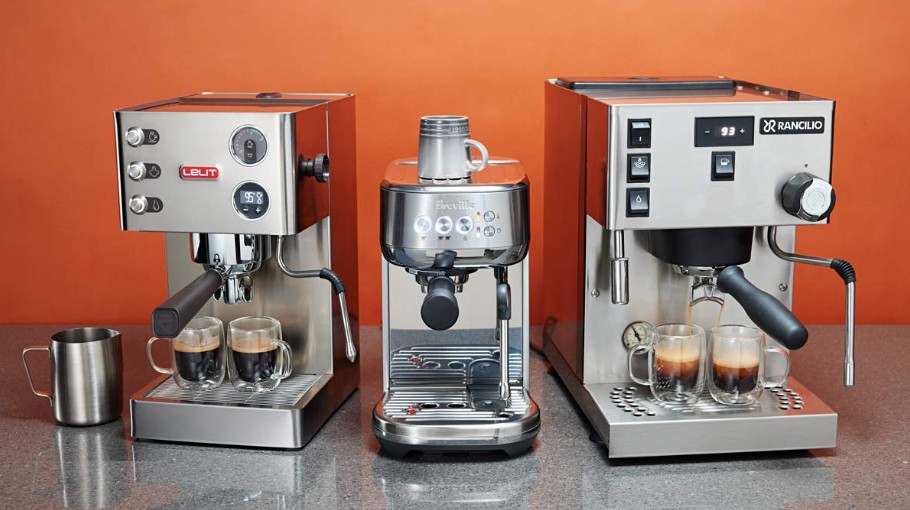
Making café-style espresso at home no longer requires a commercial machine or years of barista training. Today’s best home espresso machines can deliver balanced shots, textured milk, and repeatable results without taking over the kitchen. The key is choosing a machine that fits your routine rather than buying the model with the longest feature list.
Start with what you drink most and how involved you want to be. A cappuccino lover needs dependable steam performance, while an espresso purist may care more about temperature stability and control. Your grinder, available counter space, cleanup tolerance, and morning schedule should all shape the decision.
What to Look for in a Home Espresso Machine
Consistent heat and pressure matter more than decorative extras. Look for stable brewing temperatures, sensible shot controls, and a portafilter that feels comfortable to use. Fast heating helps on busy mornings, but repeatability matters more: the machine should produce similar results when the dose, grind, and beverage weight remain the same. The Specialty Coffee Association publishes research-based espresso-machine standards covering equipment performance and testing methods.
Milk-drink fans should also examine the steam system. Automatic wands make lattes easier for beginners, while manual wands provide more control over milk texture. Removable water tanks, accessible drip trays, cleaning alerts, and available replacement parts may seem less exciting, but they make a noticeable difference in everyday ownership.
Best Home Espresso Machines for Different Coffee Drinkers
For most households, the Breville Bambino Plus is a strong all-rounder. Serious Eats named it its favorite overall and semi-automatic model, highlighting its temperature consistency, compact size, and automatic milk steaming. Breville says the steam wand offers three milk-temperature settings and three texture levels. That combination suits beginners who want guidance without giving up the hands-on experience of using a portafilter.
More experienced users may prefer the Gaggia Classic Pro E24, which has a lead-free brass boiler, a three-way solenoid valve, and nine-bar brewing pressure. It rewards careful grinding and technique but requires more practice. For an integrated grinder, consider the Breville Barista Express Impress or De’Longhi La Specialista Arte Evo. Buyers who value one-touch convenience may find a fully automatic machine such as the Philips 3300 LatteGo more practical.
Why the Grinder Matters as Much as the Machine
Freshly ground coffee with a consistent particle size makes dialing in espresso much easier. A grinder that cannot make small, repeatable adjustments may cause one shot to run too quickly and the next to stall. A modest espresso machine paired with a capable burr grinder can therefore outperform a costlier machine using uneven grounds. Espresso-focused grinders such as the Baratza Encore ESP provide smaller adjustments designed for dialing in shots.
Separate grinders usually offer better upgrade flexibility, while built-in grinders reduce clutter and simplify the workflow. Whichever route you choose, use a small digital scale to weigh the coffee and finished drink. A useful starting point is about 18 grams of coffee producing 36 grams of espresso, then adjusting the grind according to taste rather than judging the shot by crema alone.
Budget, Maintenance, and Long-Term Value
Entry-level machines can make enjoyable drinks, but very low prices may mean weaker temperature control, lighter components, or less capable steaming. Midrange semi-automatic machines often provide the best balance for people willing to learn. Integrated grinders, assisted tamping, touchscreens, dual boilers, and automatic milk systems raise the price because they save effort or support faster back-to-back drinks.
Remember that the machine is only part of the budget. A grinder, scale, tamper, cleaning products, water filters, and fresh beans all affect the final cup. Purge and wipe the steam wand after every use, empty the drip tray regularly, and descale according to the manufacturer’s instructions and your water hardness. A repairable model with available parts may provide better long-term value than a cheaper sealed appliance.
How to Choose the Right Machine for Your Kitchen
Choose a compact semi-automatic model when space is tight and you enjoy learning the brewing process. Pick an integrated-grinder machine when you want fewer separate appliances. A fully automatic bean-to-cup machine suits a household that prioritizes speed and simple operation, although it normally gives you less direct control over extraction and milk texture.
Before ordering, measure height as well as width and depth, especially beneath cabinets. Check where the water tank is removed, whether your cups fit beneath the spouts, and how easily the drip tray comes out. The right machine is not necessarily the most advanced one; it is the model you can use, clean, and enjoy consistently.
Conclusion
The best home espresso machines combine stable brewing, suitable milk performance, and a workflow that matches the user. The Bambino Plus is a compelling option for most beginners, the Gaggia Classic Pro E24 suits hands-on enthusiasts, and integrated or fully automatic models serve buyers who value convenience. Pair your choice with a capable grinder, fresh beans, measured doses, and regular cleaning for more dependable results.
FAQs
Which espresso machine is best for beginners?
A compact semi-automatic model with preset shots and automatic milk steaming offers a manageable learning curve while still teaching essential espresso skills.
Is a built-in grinder worth it?
Yes, when convenience and a tidy counter matter most. A separate espresso grinder normally provides more adjustment range and easier future upgrades.
How much should I spend on a home espresso machine?
Spend according to your preferred workflow. Include the grinder, accessories, cleaning supplies, and filters when calculating the total cost.
Can a home espresso machine make café-quality coffee?
Yes. Consistent heat, fresh beans, an espresso-capable grinder, a measured recipe, and good technique matter more than premium styling.
