
Flickering lights are easy to ignore when they happen occasionally, but repeated flickering can be a sign that something needs attention. Sometimes the cause is as simple as a loose bulb or an aging LED. In other cases, the problem may involve a faulty switch, incompatible dimmer, overloaded circuit, loose electrical connection, or unstable voltage.
Understanding how to fix flickering lights begins with identifying where the problem occurs. A single flickering bulb usually has a different cause from lights flickering throughout several rooms. By starting with simple checks and knowing when to stop troubleshooting. You can solve minor lighting problems safely while avoiding unnecessary electrical risks.
Why Do Lights Flicker in Your Home?
Lights flicker when the electrical power reaching the bulb is interrupted or changes unexpectedly. If only one bulb flickers, the bulb may be loose, damaged, or nearing the end of its usable life. A worn socket can also cause inconsistent contact between the bulb and fixture. Replacing the bulb with a known-good, compatible bulb is one of the easiest ways to determine whether the problem comes from the light itself.
If several lights flicker at the same time, however, the issue may be more complicated. Electrical loads from air conditioners, refrigerators, heaters, pumps, and other large appliances can sometimes cause brief voltage changes when they start. Persistent or severe flickering may also be associated with overloaded circuits, deteriorated wiring, loose connections, or problems with the electrical supply entering the home. The pattern of the flickering is therefore an important clue when diagnosing the cause.
How to Fix Flickering Lights Step by Step
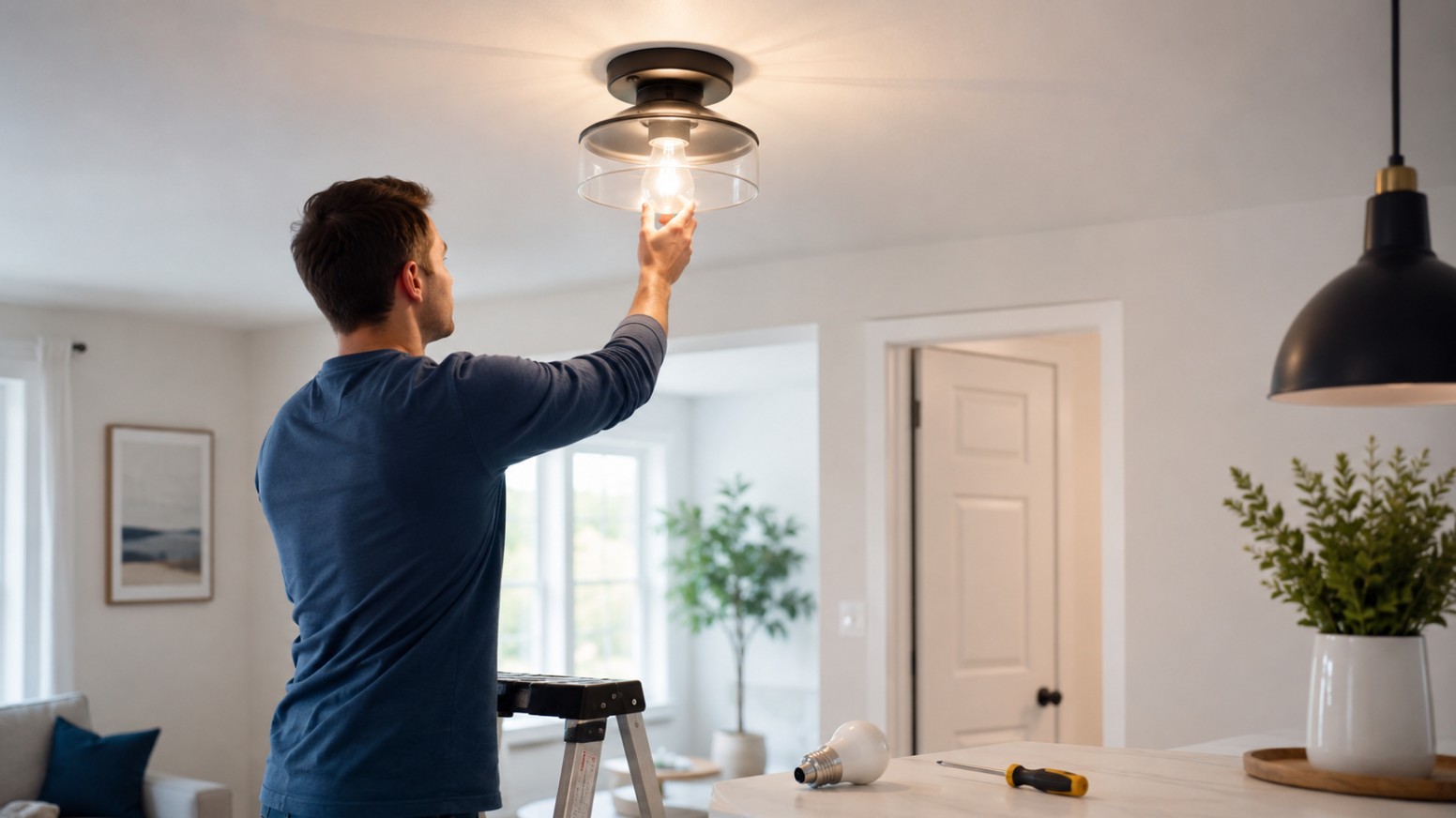
Start by turning the affected light off and allowing the bulb to cool. Check whether the bulb is properly seated in its socket, but avoid overtightening it because that can damage the bulb or socket. Turn the light back on and observe it. If the flickering continues, replace the bulb with another bulb that is the correct type and rating for the fixture If the replacement operates normally. The original bulb was likely responsible.
If a new bulb also flickers, pay attention to the fixture and switch. Notice whether the flicker appears when you touch or operate the switch. Whether the fixture makes unusual noises, and whether the problem occurs when another appliance turns on. Basic observations like these can help narrow down the cause without opening electrical boxes. You can follow established home electrical safety guidance from the NFPA when deciding whether a problem is suitable for simple troubleshooting or requires professional attention.
A useful troubleshooting order is:
- Check whether the bulb is loose.
- Test a known-good replacement bulb.
- Confirm that the bulb is suitable for the fixture.
- Check whether a dimmer switch is involved.
- Notice whether major appliances trigger the flickering.
- Look for buzzing, heat, discoloration, sparks, or burning smells.
- Determine whether one light or several rooms are affected.
Avoid removing switches, outlets, fixture wiring, or breaker-panel covers unless you are properly trained to work on electrical systems. A flickering bulb can be inexpensive to replace; an unsafe attempt to repair live wiring can create a much greater hazard.
When Flickering Lights Signal an Electrical Problem
A single light that occasionally flickers is often caused by the bulb or fixture. Flickering throughout several rooms is more concerning because it can indicate a problem affecting a circuit or the home’s electrical service. If lights become noticeably dim whenever a high-powered appliance starts, the electrical system may be experiencing a significant voltage drop or may not have enough capacity for the connected load.
Certain symptoms should never be dismissed as normal lighting behavior. A switch or outlet that feels unusually warm, repeated circuit-breaker trips, crackling sounds, burning odors, visible discoloration, or sparks can indicate overheating or a faulty electrical connection. Loose connections can generate heat and electrical arcing, which is why these problems should be inspected rather than repeatedly resetting breakers or replacing bulbs.
You should take flickering more seriously if you notice:
- Several lights flickering together
- Frequent breaker trips
- Burning or melted-plastic smells
- Buzzing or crackling from switches or outlets
- Warm or discolored switch plates
- Sparks from a fixture, outlet, or switch
- Flickering that becomes progressively worse
If flickering affects most of the house but your fixtures and circuits appear normal, the problem could also be related to the incoming electrical supply. In that situation, a licensed electrician can inspect the property and determine whether the issue is inside the home or whether the electric utility should investigate the service.
How to Fix Flickering LED Lights and Dimmer Problems
LED lights are especially sensitive to incompatible dimmer switches. Traditional dimmers were often designed for incandescent bulbs, which use electrical power differently from modern LEDs. Even if an LED bulb is labeled “dimmable,” it may still flicker when paired with a dimmer that was not designed or tested for that particular type of LED lighting.
If your lights work normally at full brightness but flicker when dimmed, compatibility should be one of the first things you check. Make sure the LED bulb itself is dimmable and that the dimmer is designed for LED loads. Some modern dimmers also allow the minimum brightness level to be adjusted. Raising that minimum setting can sometimes prevent LEDs from flickering at very low brightness.
LED fixtures can also flicker because of problems with their internal drivers. The driver regulates the power supplied to the LED components. If it begins to fail, an integrated LED fixture may flicker even when no dimmer is installed. In fixtures where the driver cannot easily be replaced, replacing the complete light fixture may be more practical.
Poor-quality or aging bulbs can create similar symptoms. If several identical LED bulbs have been installed for years and one starts flickering while the others remain stable, replacing that individual bulb is a reasonable first step. When every LED connected to the same switch flickers, the dimmer, circuit, or supply deserves closer attention.
When Should You Call an Electrician?
You do not necessarily need an electrician every time a bulb flickers. Replacing a loose, failing, or incompatible bulb is a straightforward solution for many household lighting problems. However, troubleshooting should stop when there are signs that the issue extends beyond the bulb or simple fixture operation.
Contact a qualified electrician if several rooms are flickering, breakers repeatedly trip, switches become hot, you hear crackling from electrical components, or you notice burning smells or visible damage. You should also arrange an inspection if flickering persists after replacing bulbs and confirming that your dimmer and lighting equipment are compatible. Homes with older electrical systems may benefit from professional evaluation when unexplained flickering becomes frequent.
Do not continue using a fixture that is sparking, producing a burning smell, or becoming unusually hot. Turn off the affected circuit if this can be done safely and have the problem inspected. Electrical faults can worsen over time, so early professional diagnosis is generally safer than repeatedly trying temporary fixes.
Conclusion
Knowing how to fix flickering lights starts with identifying whether the problem affects a single bulb, one fixture, or several parts of the home. Loose bulbs, worn lamps, LED dimmer incompatibility, and failing fixtures are common causes that can often be identified with simple checks.
Persistent whole-house flickering, breaker trips, buzzing, heat, burning smells, or sparks are different. These symptoms can point to wiring, circuit, or electrical-supply problems and should be handled by a qualified professional. Start with the simplest safe checks, but do not take unnecessary risks with electrical wiring.
Frequently Asked Questions
Why does my light flicker even after changing the bulb?
The problem may be with the socket, switch, dimmer, fixture wiring, LED driver, or electrical circuit rather than the bulb itself. If the flickering continues with a known-good bulb, further inspection may be necessary.
Why do my lights flicker when the air conditioner turns on?
Large appliances can draw significant power when starting, causing a brief voltage drop. Minor momentary dimming may occur, but strong or frequent flickering should be checked by an electrician.
Can a bad dimmer switch cause LED lights to flicker?
Yes. LED bulbs can flicker when connected to an incompatible or older dimmer. Use dimmable LED bulbs together with a dimmer specifically designed for LED lighting.
Are flickering lights a fire hazard?
Flickering itself does not always mean there is a fire hazard, but flickering caused by loose wiring, overheating, or electrical arcing can be dangerous. Flickering combined with heat, burning smells, buzzing, discoloration, or sparks requires prompt professional attention.
