
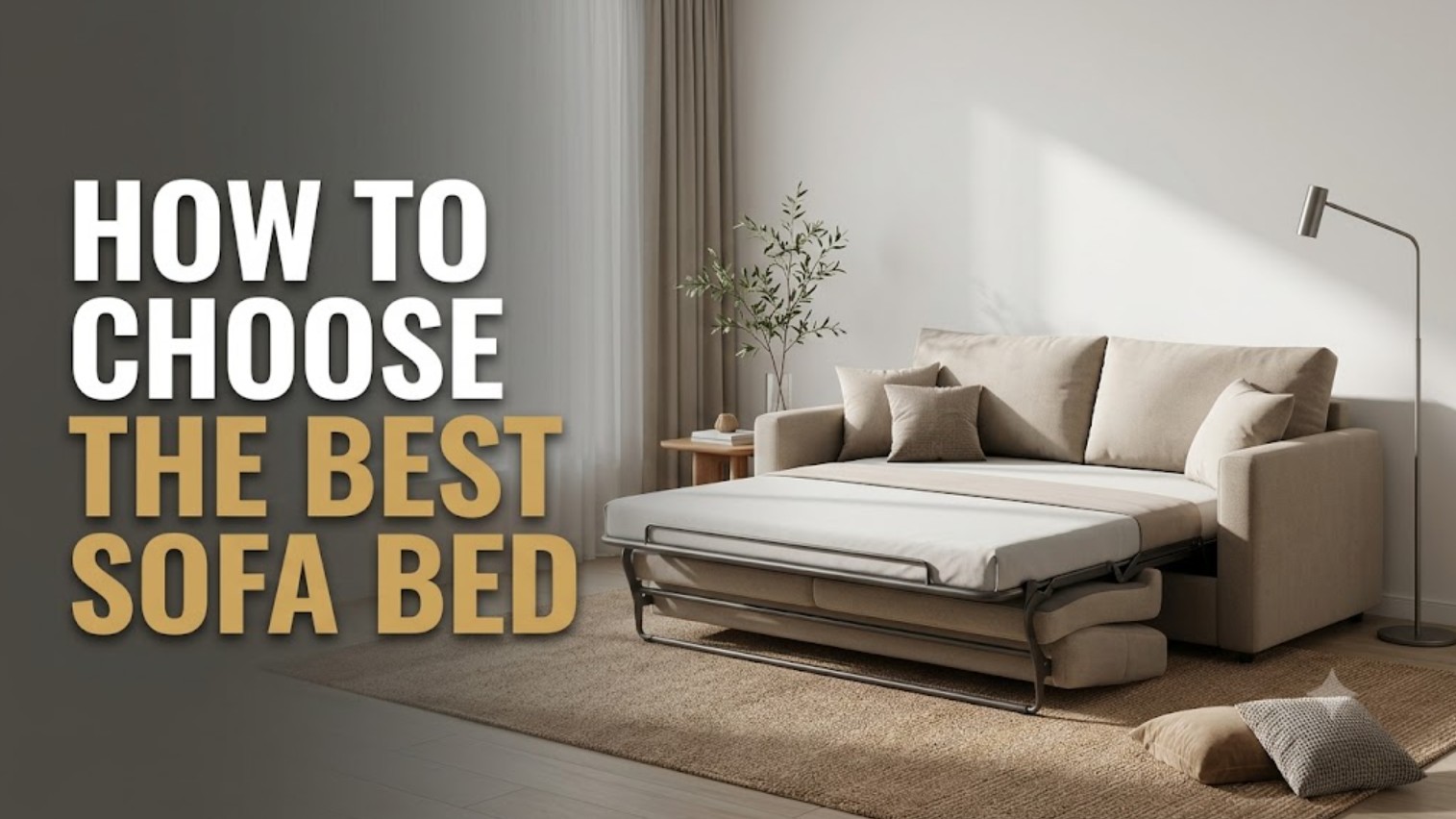
A sofa bed is useful when one room needs to serve more than one purpose. During the day, it provides ordinary seating. At night, it creates a place for guests to sleep without requiring a permanent spare bed. This makes it practical in flats, studio apartments, home offices, guest rooms, and smaller family homes.
The right model should not be judged only by how it looks as a sofa. It also needs to open easily, fit the room when extended, and offer a supportive sleeping surface. Size, mechanism, mattress construction, upholstery, frame strength, and after-sales support all influence whether a sofa bed feels like a smart purchase or an awkward compromise.
Measure the Room and Sleeping Area
Start by measuring the space in both seating and sleeping configurations. Record the maximum width, depth, and height available, then check the product’s dimensions when fully opened. Leave clearance for doors, cupboards, radiators, and walking routes. John Lewis advises checking the extended position of convertible furniture because the open footprint can be much larger than the closed sofa.
Marking the footprint with painter’s tape helps you visualise the scale. Measure the complete delivery route too, including doorways, hallways, lifts, stairs, and tight turns. Check package dimensions, removable feet, arm height, and diagonal depth rather than relying only on width. Also compare the actual sleeping width and length, since labels such as single or double are not always identical across brands.
Compare Sofa Bed Mechanisms
Traditional pull-out sleepers hide a folded mattress beneath the seat cushions. They usually resemble a standard sofa when closed and provide a defined mattress when opened. Their main drawbacks are weight, a larger open footprint, and the possibility of feeling the support frame through a thin mattress. They suit homes that want a conventional-looking sofa with occasional guest accommodation.
Clic-clac models use the seat and backrest as the sleeping surface. They are quick to open and often work well in smaller rooms, although the centre join may be noticeable. Pull-out platforms and trundles slide or lift an extra section from beneath the seat. Sectional sofa beds can add storage under a chaise, while chair beds are useful when only one person needs to sleep.
Check Mattress Comfort and Build Quality
How often the bed will be used should guide the mattress choice. For occasional guests, a thinner foam mattress or padded convertible surface may be adequate. For frequent use, look for high-resilience foam, pocket springs, memory foam, or a supportive hybrid design. John Lewis notes that some two-fold mechanisms can hold mattresses up to about 10 centimetres deep, while thinner three-fold systems are generally better for occasional use.
Test the bed in person whenever possible. Lie in your normal position and check for central ridges, gaps, hard frame bars, unstable edges, and excessive sinking. A topper can improve pressure relief, but it cannot correct a weak frame or uneven platform. IKEA’s official guide to choosing a sofa bed also recommends considering both available space and the level of sleeping comfort required.
The frame and mechanism must support repeated conversion. Look for kiln-dried hardwood, engineered hardwood, reinforced metal, secure joints, and a stated weight limit. Open and close the mechanism several times. It should move evenly, lock securely, and sit level without scraping, twisting, or requiring excessive force.
Choose Practical Upholstery and Style
Upholstery should match the way the room is used. Performance polyester and tightly woven blends are practical for children, pets, and regular visitors because they tend to resist wear and are easier to maintain. Cotton and linen blends may feel softer but can crease or absorb stains more readily. Velvet looks rich, although it can show pressure marks and changes in pile direction.
Removable covers are useful, but do not assume they are machine washable. Some require professional cleaning or careful spot treatment. Read the care label and ask whether replacement covers are available. Dark fabrics may hide some stains but show lint and pale pet hair, while light upholstery can reveal spills and dye transfer from clothing.
Style still matters because the piece will spend most of its life as a sofa. Slim arms and raised legs help a compact room feel more open. Deep seats and broad arms create a relaxed look but reduce usable sleeping width. Neutral colours are easier to coordinate, while a stronger colour can turn the sofa into a focal point.
Review Maintenance, Warranty, and Value
A sofa bed contains more moving parts than an ordinary sofa, so basic maintenance matters. Remove bedding before closing it, keep loose fabric away from hinges, and never force a mechanism that feels blocked. Vacuum beneath the cushions, blot spills promptly, and follow the upholstery maker’s cleaning instructions. Check visible bolts, legs, tracks, and support bars periodically.
Read the warranty by component rather than focusing only on the headline period. The frame, mattress, cushions, upholstery, and opening mechanism may have different coverage. Ask whether sagging, fabric stretching, accidental damage, or commercial use is excluded. Replacement mattresses and mechanism parts are valuable if the product will be used regularly.
Price should be compared with construction, not appearance alone. A budget model may be sensible for rare overnight guests, while a stronger design can be worthwhile when it replaces both the main sofa and a regularly used bed. Include delivery, assembly, returns, replacement parts, and cleaning costs when judging long-term value.
Conclusion
Choosing the best sofa bed starts with accurate measurements and a realistic view of how often it will be used for sleeping. The mechanism should open easily, the mattress should suit the intended user, and the frame should remain stable in both configurations.
Before ordering, compare actual sleeping dimensions, test the comfort where possible, inspect the warranty, and confirm the delivery route. A well-chosen model can provide dependable seating and useful guest accommodation without overcrowding the room.
Frequently Asked Questions
Can a sofa bed be used every night?
Yes, but choose a model designed for regular sleeping, with a supportive mattress, strong frame, and durable mechanism.
What type is best for a small room?
A chair bed, compact clic-clac, or small two-seater usually works best. Measure the full open depth first.
Is a sofa bed as comfortable as a normal bed?
Some premium models come close, but many have thinner mattresses. Comfort depends on mattress depth, support, and surface flatness.
Does a sofa bed need a mattress topper?
Not always. A topper can add softness, but it should not be used to hide a weak or uneven base.
