
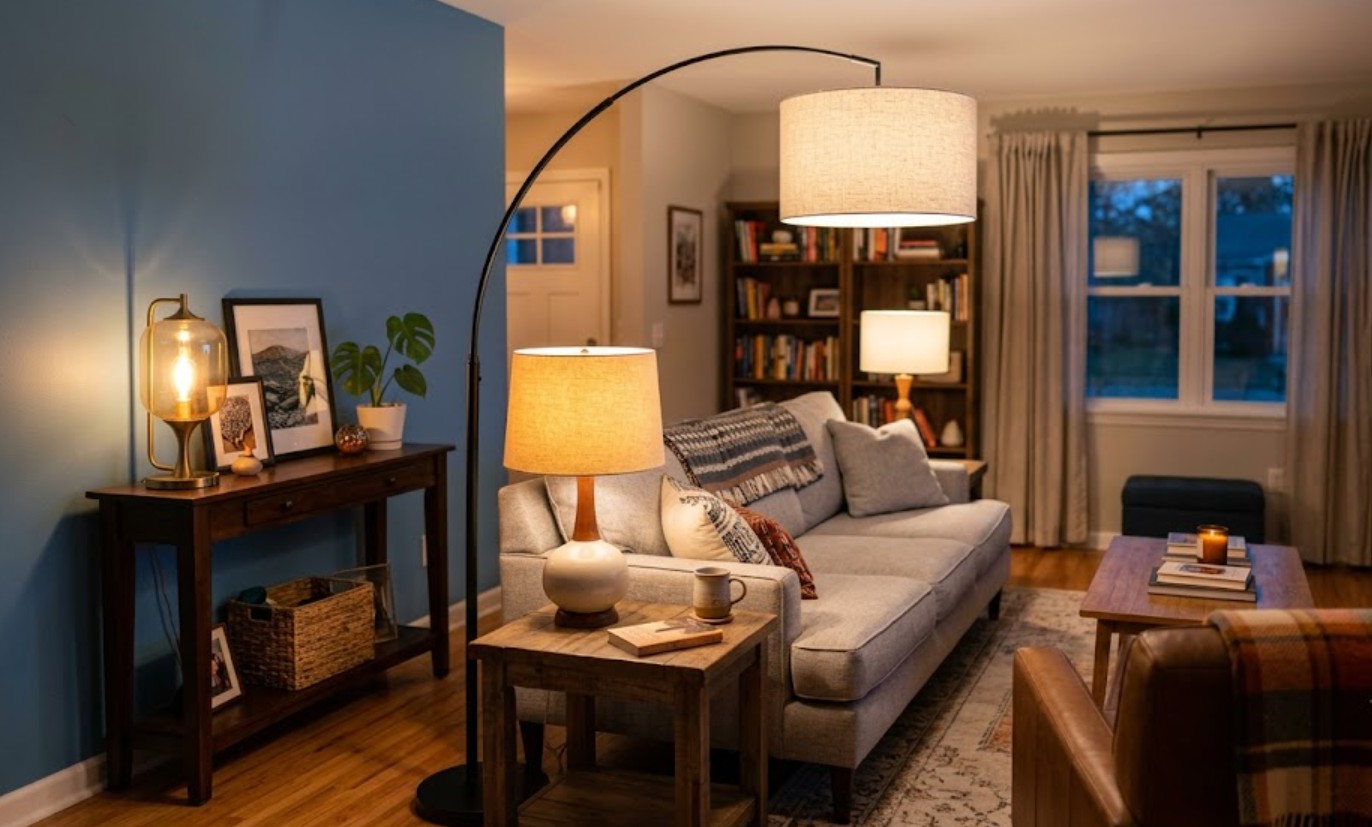
Living room lamps do more than brighten a room. They shape the mood, improve comfort, and make the space feel complete. A living room with only one ceiling light can feel harsh, flat, or unfinished. Lamps add softer light at different levels, which makes the room feel warmer and more welcoming.
Choosing the best living room lamps depends on how you use your space. Some people need a lamp for reading. Others want soft evening light near the sofa or a statement piece for an empty corner. The right choice should match your room size, furniture layout, lighting needs, and personal style.
Why Living Room Lamps Matter in Home Design
Lighting has a strong effect on how a living room feels. Even expensive furniture can look dull under poor lighting. A well-placed lamp can highlight textures, soften shadows, and bring attention to important areas, such as a sofa, side table, bookshelf, or reading chair.
Living room lamps also make the space more practical. A floor lamp can brighten a dark corner without needing extra wiring. A table lamp can make a side table useful at night. Accent lamps can create a relaxed mood when you do not want bright overhead lighting.
Good lighting usually comes from layers. This means using different light sources instead of depending on one fixture. A ceiling light may provide general brightness, but lamps add comfort, focus, and atmosphere. This layered approach makes the room easier to use throughout the day.
For example, you may want brighter light while cleaning or entertaining guests. Later in the evening, you may prefer a soft table lamp while watching TV. This flexibility is one reason lamps are so important in living room design.
Best Types of Living Room Lamps for Different Spaces
Floor lamps are one of the most useful choices for living rooms. They work well beside sofas, behind chairs, and in empty corners. A tall floor lamp can add height to the room and spread light without taking up table space. Arc floor lamps are especially useful when you want light over a sofa or reading chair.
Table lamps are better for side tables, console tables, and shelves. They create soft, eye-level lighting and make the room feel balanced. A pair of matching table lamps can look elegant on both sides of a sofa. A single table lamp can also work well beside a reading chair or near a media unit.
Task lamps are best for focused activities. If you read, write, sew, or work in your living room, a task lamp gives direct light where you need it. These lamps usually have adjustable arms or shades, so you can control the direction of light more easily.
Accent lamps are mainly used for mood and decoration. They are usually smaller and softer than task lamps. You can place them on bookshelves, cabinets, or narrow console tables. They are not designed to light the whole room, but they help make the space feel layered and finished.
How to Choose the Right Brightness, Bulb, and Size
Brightness is one of the most important factors when choosing living room lamps. Many people still think in watts, but lumens are more useful. Lumens tell you how bright a bulb is, while watts only tell you how much energy it uses. A living room usually looks better with several moderate light sources instead of one extremely bright lamp.
For most homes, warm white light works best in living rooms. Bulbs around 2700K to 3000K usually create a cozy and natural feel. Cooler bulbs can look too sharp in a relaxing space, although they may work in a reading corner or home office area. For energy efficiency and long-term use, trusted sources such as ENERGY STAR LED lighting guidance explain why LED bulbs are a practical choice for modern homes.
Size also matters. A small lamp can look lost beside a large sofa, while an oversized lamp can overpower a small side table. The lamp should feel balanced with nearby furniture. For table lamps, the bottom of the shade should usually sit close to eye level when you are seated. This helps reduce glare and makes the light more comfortable.
Shade material affects how the lamp performs. Fabric shades create soft, diffused light. Metal shades direct light more strongly in one direction. Glass shades can look stylish but may create glare if the bulb is too bright. Before buying, think about whether you want soft mood lighting, focused reading light, or decorative lighting.
Living Room Lamp Style Ideas for a Cozy Look
The best lamp style depends on the look of your living room. For a modern space, slim black, brass, chrome, or glass lamps can work well. These designs feel clean and simple. They are useful when you want the lighting to look stylish without making the room feel crowded.
For a warmer or traditional living room, ceramic bases, fabric shades, wood details, and antique brass finishes can add softness. These materials work well with neutral sofas, warm rugs, curtains, and natural textures. They help the room feel lived-in instead of overly formal.
If your room is small, choose lamps that do not take too much visual space. Slim floor lamps, narrow table lamps, or wall-mounted lamps can give good light without making the area feel tight. Avoid very bulky bases if your side tables are small.
For a large living room, you can use lamps as design features. A tall tripod lamp, sculptural floor lamp, or large ceramic table lamp can become part of the room’s personality. In bigger spaces, using lamps in pairs can also make the layout feel more balanced.
Common Mistakes to Avoid When Buying Living Room Lamps
One common mistake is buying a lamp only because it looks attractive. A lamp should also fit the room’s purpose. A beautiful lamp with weak light may not help if the area needs brightness. A strong task lamp may be useful, but it can feel too harsh if you only want soft evening light.
Another mistake is ignoring scale. Lamps should match the size of the furniture around them. A tall floor lamp may look good beside a large sectional sofa, but it may feel too heavy in a compact room. A tiny table lamp may look decorative, but it may not provide enough useful light.
People also forget about bulb colour. A stylish lamp can still look wrong if the bulb is too cool or too bright. Warm white bulbs usually suit living rooms better because they create a softer and more relaxing atmosphere.
Cord placement is another practical detail. A lamp should reach the outlet safely without stretched wires or messy extension cords. If the lamp will sit in a busy area, make sure the base is stable. This is especially important in homes with children or pets.
Conclusion
The best living room lamps combine style, comfort, and function. Floor lamps are useful for corners and seating areas. Table lamps add warmth and balance. Task lamps help with reading, while accent lamps create a softer mood.
Before choosing a lamp, consider brightness, bulb colour, size, shade material, and placement. A good lamp should not only look beautiful. It should make your living room easier to use and more comfortable to enjoy.
FAQs
1. What type of lamp is best for a living room?
Floor lamps and table lamps are usually the best choices. Floor lamps work well in corners and beside sofas, while table lamps add soft light near seating areas.
2. How many lamps should a living room have?
Most living rooms look better with two to four lamps, depending on room size. The goal is to spread light evenly instead of relying on one source.
3. What colour bulb is best for living room lamps?
Warm white bulbs around 2700K to 3000K are best for most living rooms. They create a cozy and relaxing feel.
4. Are LED bulbs good for living room lamps?
Yes, LED bulbs are a good choice. They use less energy, last longer, and are available in warm tones suitable for living rooms.
